Signs Your Last Crawl Space Job Wasn't Done Properly
Introduction
Signs of a Bad Crawl Space Job
WHAT WE FOUND UNDER ANOTHER HOMEOWNER'S HOUSE
We went under another homeowner's house recently to check out another company's work. What we found wasn't surprising, honestly. An Amazon dehumidifier sitting on the ground, unplugged. Mice droppings everywhere. Roaches too.
This happens more than people realize. Someone hires a crawl space company, the plastic goes down, everything looks fine from the outside, and the homeowner moves on with their life. Then a few years later, something feels off. Maybe there's a smell. Maybe they notice bugs. Maybe nothing seems wrong at all, and that's actually part of the problem.
Most people can't tell the difference between a good crawl space job and a bad one just by looking at it. That's not their fault - they're not supposed to be experts. But that's exactly why we're writing this. If you've had crawl space work done before, here's what to look for.

The Dehumidifier Problem
The first thing we noticed on this job was the dehumidifier. It wasn't a trusted brand - just something ordered off Amazon. And it wasn't even plugged in.
We plugged it in to see if it would turn on, and it did. But that's not the point. A dehumidifier that's not running isn't protecting anything. It's just sitting there, doing nothing, while moisture builds up underneath the house.
A proper setup uses a real brand like AprilAire, something built to run consistently and handle the humidity levels a crawl space actually needs. It also means someone checks on it. Services it. Makes sure it's doing its job long after the crew packed up and left.
If nobody's told you what brand your dehumidifier is, or when it was last serviced, that's worth asking about.



Signs of Pest Activity
The next thing we noticed was pest activity. Mice droppings scattered around. Roaches too.
Here's something worth understanding - encapsulation itself doesn't act as pest control. But it does change the environment under your house. Less moisture usually means fewer pests that need it to survive, things like camel crickets and certain insects. That's a side benefit, not the main point.
But that benefit only shows up when the job is sealed properly. If the vents aren't closed off right, if there are gaps in the plastic, pests are going to find their way in regardless of how nice the encapsulation looks on the surface.
This job wasn't sealed well. That's why we were finding droppings and roaches instead of a clean, controlled space.
Why This Happens
This isn't rare. It happens because somebody went with the cheapest option they could find.
A company shows up, throws down some plastic, grabs a cheap dehumidifier off the internet, and moves on to the next job. They got paid. They're gone. And a few years later, the homeowner is stuck dealing with the consequences, usually without any way to track down who did the original work.
I say this all the time: do it right or do it twice. This is exactly what that looks like in real life. Somebody paid for a job once already. Now they're paying again to have it actually done correctly.
The frustrating part is, it's completely avoidable. It just requires hiring someone who's going to do it right from the start instead of cutting corners to save a few dollars upfront.
What We Actually Fixed
Here's where a lot of companies would take advantage of the situation. They'd tell the homeowner the whole thing needs to be ripped out and redone, charge ten thousand dollars or more, and call it a day.
We didn't do that.
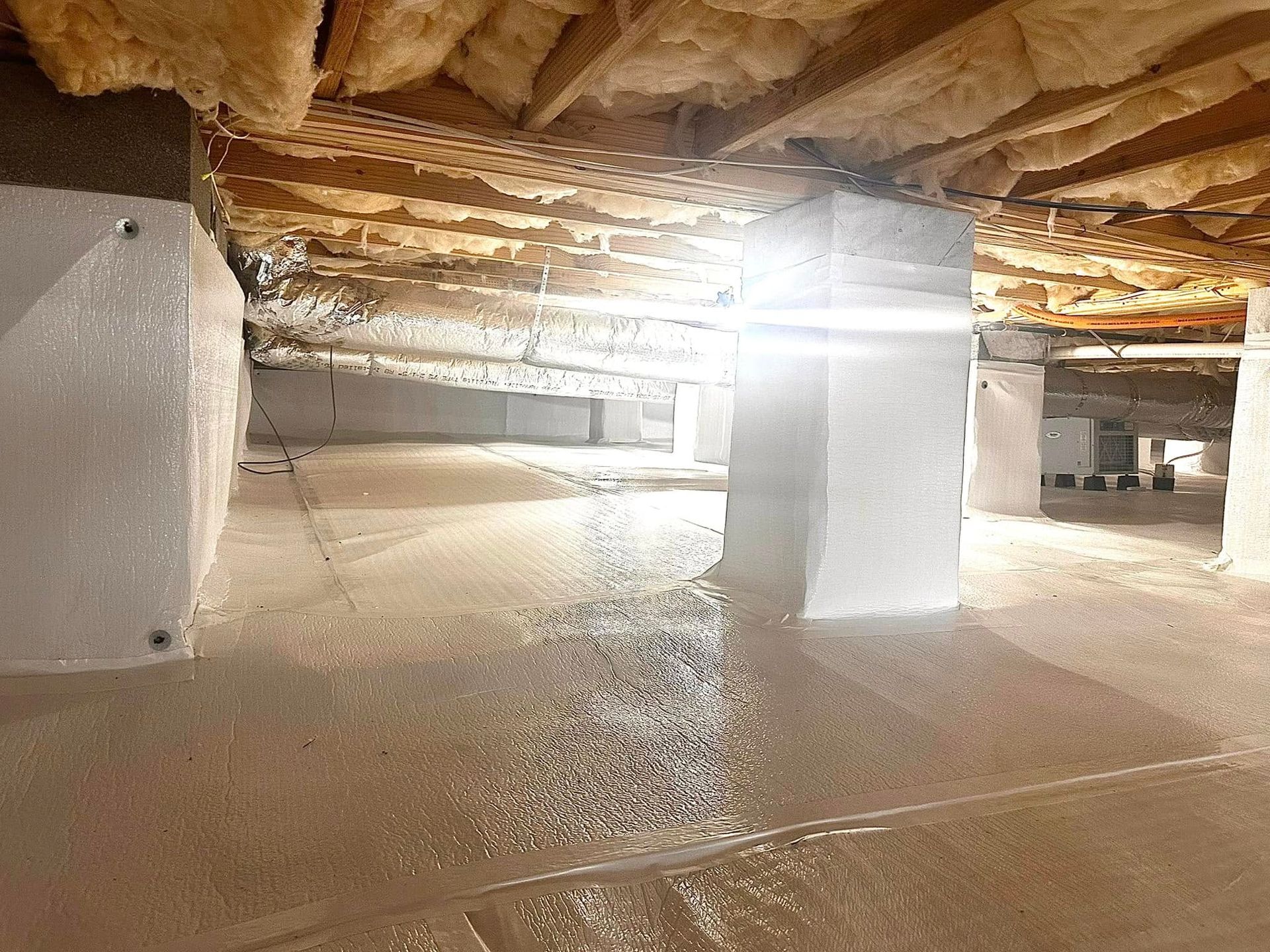
The vapor barrier, while not pretty, was still doing its job. It wasn't falling apart or completely compromised. So we left it. There's no reason to charge somebody for a full redo when what's down there still works as a vapor barrier. It won't win any photography awards, but function matters more than looks here.
What we did replace was the dehumidifier, swapping it out for a proper AprilAire unit. We also handled the rodent proofing to deal with the pest issue at its source.
That's the difference between fixing what's actually broken and manufacturing a bigger bill. We fix what needs fixing. We don't invent problems.
How to Know If Your Crawl Space Was Done Right
If you've had crawl space work done in the past, here are a few things worth checking.
Ask what brand of dehumidifier is down there. If nobody can tell you, or if it's something you've never heard of, that's worth looking into. A trusted brand like AprilAire is built to run consistently for years, not just get the job done cheap.
Ask when it was last serviced. A dehumidifier isn't something you install and forget about. It needs regular maintenance to keep working the way it should.
Check for signs of pests. Droppings, bugs, anything that shouldn't be down there. If you're seeing that, it usually means the sealing wasn't done properly.
And take a look at the vapor barrier if you can. It doesn't need to be perfect, but it shouldn't have gaps, tears, or obvious damage.
None of this requires you to be an expert. You just need to know what questions to ask and what to look for.
Why We Do It This Way
We could have told this homeowner the whole job needed to be redone. We could have charged ten thousand dollars and walked away with a bigger check.
We didn't, because that's not how we do business.
Our job is to fix what's actually broken, not invent problems to pad an invoice. If the vapor barrier is still doing its job, we leave it alone. If the dehumidifier isn't working, we replace it with something that will last. If there's a pest issue, we handle it at the source instead of ignoring it or overselling a solution.
This approach costs us some money in the short term. We could charge more. But it builds something more valuable long-term - trust. Homeowners talk to their neighbors. They remember who was honest with them and who tried to take advantage of a bad situation.
We'd rather be the company people trust than the company that made the most off one job.

Ready for an Honest Look at Your Crawl Space?
If you're not sure whether your last crawl space job was done right, we're happy to take a look.
We offer free inspections for homeowners in the Nashville area. I do these myself, and I'll give you a straight answer about what's going on under your house. No pressure, no upselling, no invented problems.
If everything's fine, I'll tell you that too. If something needs attention, I'll explain exactly what and why, so you can make a decision that makes sense for your home.