What Nashville Homeowners Should Understand About Crawl Space Encapsulation
Introduction
Inside or Outside?
THE ONE QUESTION THAT EXPLAINS EVERYTHING
Here's a question I ask every homeowner I meet with. Do you want your crawl space to be inside your house or outside your house?
Most people have never thought about it that way. But that question gets to the heart of what encapsulation actually does.
Right now, if your crawl space isn't encapsulated, it's basically outside. It doesn't matter that it's technically under your living room. As far as air, moisture, and pests are concerned, that space is part of the outdoors. Once it's encapsulated the right way, that changes completely. The crawl space becomes part of your home. Same air. Same humidity. Same protection you expect everywhere else in your house.
In this article, I want to break down what that difference really means, why it matters more than most people realize, and what to look for if you're trying to figure out whether your crawl space is doing its job.

What "Outside" Really Means for an Unencapsulated Crawl Space
If your crawl space hasn't been encapsulated, here's what's actually happening down there.
Hot, humid air is moving in and out freely. There's nothing stopping it. That air carries moisture, and moisture loves to settle on wood, insulation, and anything else sitting in that space. Over time, that leads to fungus growth, wood rot, and a musty smell that can work its way up into your living space.
On top of that, vapor is rising up out of the ground constantly. Dirt floors release moisture around the clock, and without a barrier, that moisture just keeps climbing. And then there's the critters. Gaps, vents, and unsealed areas are basically open doors for mice, insects, and other pests looking for a way in.
None of this is unusual. It's just what happens when a crawl space is left as part of the outside world. It's not broken. It's just doing exactly what an uncontrolled space under your house is going to do.



What Changes Once a Crawl Space Is Encapsulated
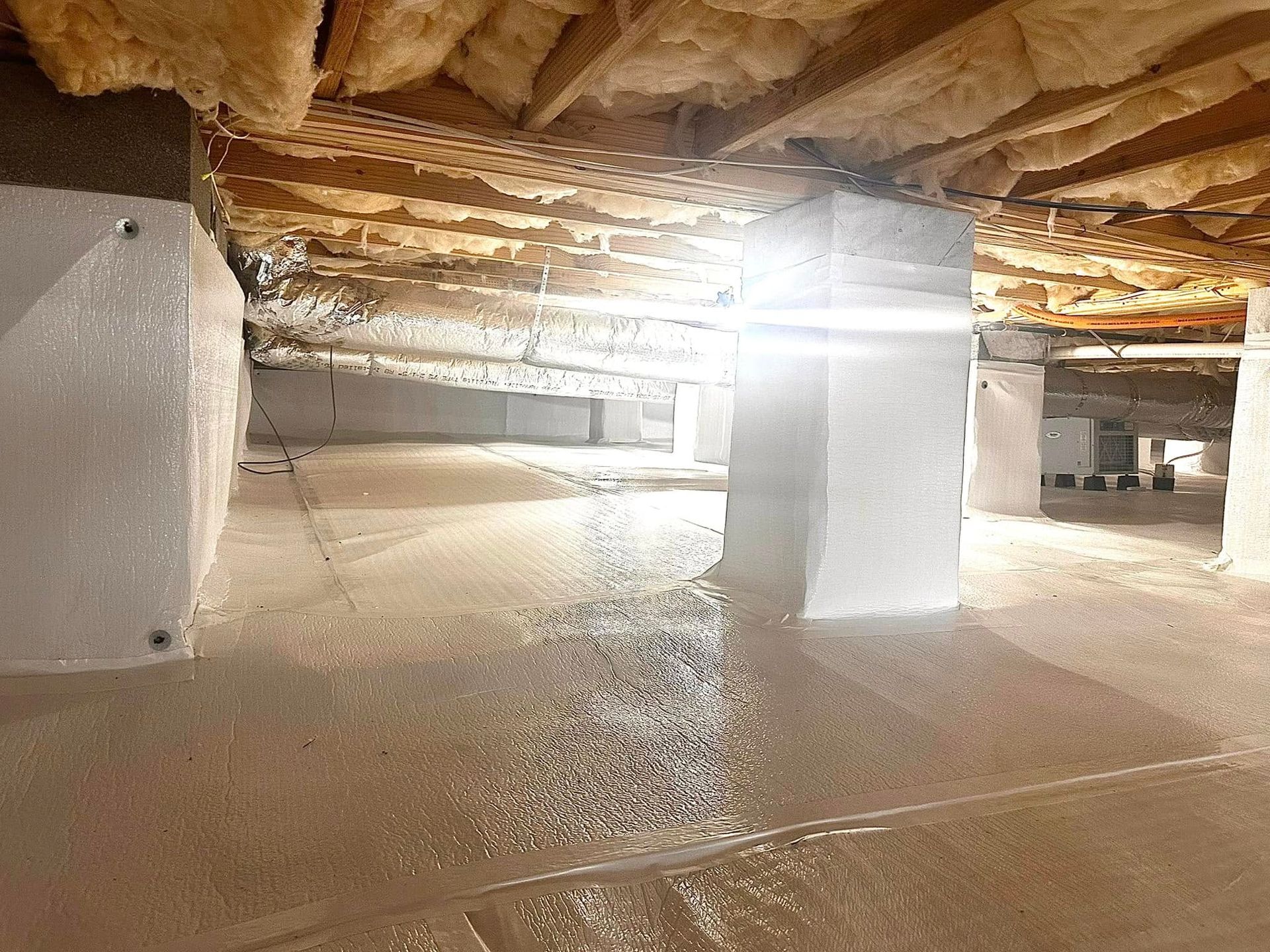
Once we encapsulate a crawl space, everything about it changes. It stops being part of the outside and becomes part of your house.
That means the humidity down there matches the humidity upstairs. The temperature stays in a similar range to the rest of your home. The ground is covered, so moisture isn't rising up anymore. Vents are sealed, so outside air isn't pouring in. The whole space becomes part of what we call the building envelope, which is just a way of saying it's now protected and controlled like every other room in your house.
This isn't a small upgrade. It's a complete shift in how that space functions. Before, it was working against your home. After, it's working with it.
Why "Mostly Sealed" Isn't the Same as Sealed
Here's something I want every homeowner to understand. A crawl space is either sealed or it isn't. There's no in-between that actually works.
I've seen plenty of jobs where a company seals up most of the space and calls it finished. Maybe they skip a vent because it's hard to reach. Maybe the plastic doesn't quite cover every corner. Maybe a gap gets left around a pipe or a support beam. To them, that might look close enough.
But close enough doesn't change the outcome. If there's even one unsealed vent or one gap in the plastic, outside air is still getting in. Moisture is still finding a way up. Pests are still finding a way through. You paid for encapsulation, but what you actually have is a crawl space that's still partly outside.
That's why finishing the job completely matters so much. Not mostly done. Not almost sealed. All the way.
What a Properly Sealed Crawl Space Can Do for You
When a crawl space is sealed the right way, the benefits go beyond just fixing a moisture problem.
Your home's humidity becomes easier to control because that constant source of outside moisture is gone. Wood moisture content drops, which protects your floor joists and subfloor from rot over time. With rodent-proofing done right, mice and other pests lose their easy way in.
A sealed, lit crawl space also becomes usable space. Instead of a damp, dark area you avoid thinking about, it becomes somewhere you could store belongings or easily access if you ever need to check on plumbing or electrical work. Good lighting down there makes a real difference too, both for you and for anyone who needs to go under the house in the future.
None of this happens with a partial job. It only happens when the space is fully sealed and treated like part of your home.
Why This Matters for Nashville Homes Specifically
Nashville's climate makes this especially important. We get hot, humid summers and plenty of rain throughout the year, which means crawl spaces here are constantly fighting moisture. If that space is still connected to the outside, it's taking on everything our weather throws at it.
A lot of homes in this area, especially older ones, were built with crawl spaces that were never designed to handle today's humidity levels. Add in clay soil that holds moisture and doesn't drain well, and you've got a recipe for the kind of fungus growth and wood damage I see on inspections all the time.
This isn't a problem unique to one neighborhood. I see it all over Nashville and the surrounding counties. It's just part of living in this region, and it's exactly why encapsulation makes such a difference here.
What to Ask Your Crawl Space Contractor
If you're getting quotes for crawl space work, a few questions can tell you a lot about whether the job will actually be done right.
Ask them how they handle vents. Every single one needs to be sealed, not just the easy ones to reach. Ask if they take photos or video of the finished job. If a company isn't willing to show you the work once it's done, that's worth paying attention to. Ask what happens if something gets missed. A company that stands behind their work will have a clear answer.
You don't need to become an expert on crawl spaces to ask good questions. You just need to know that "mostly done" isn't the same as "done," and a company that's confident in their work won't have a problem proving it.

Ready to Find Out Where Your Crawl Space Stands?
If you're not sure whether your crawl space is still part of the outside or if it's already protected like the rest of your home, I'm happy to come take a look.
I offer free inspections throughout Nashville and the surrounding area. I do every inspection myself, and I'll show you exactly what's going on under your house with photos and video, so you're not just taking my word for it.
No pressure, no sales pitch. Just an honest look and a straightforward conversation about what makes sense for your home.