Working With What You Have: Smart Crawl Space Solutions
Introduction
Budget-Friendly Crawl Space Work
QUALITY DOESN'T MEAN STARTING FROM SCRATCH
We just finished a job in Franklin, Tennessee. The homeowner had a budget they needed to stay in.
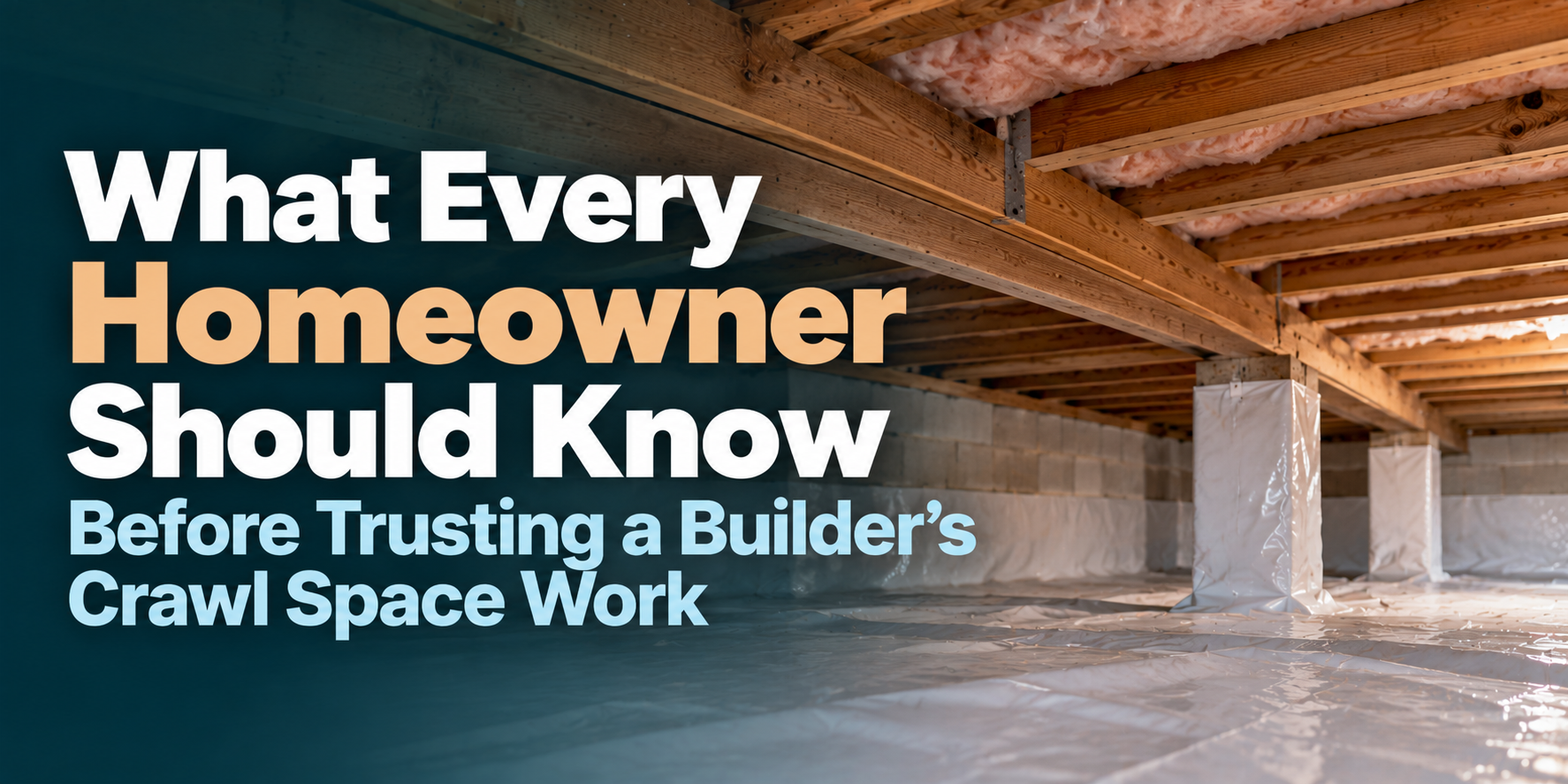
They also had a vapor barrier already down there - 12 mil poly their pest company had installed.
A lot of companies would've ripped it out and charged them for new material. We didn't see the point. The poly was in good shape. It was doing its job.
So we worked with what they had.
We focused on what actually needed to happen - rodent control, insulation, dehumidification, sealing things up right.
We stayed in budget and still gave them a crawl space that works.
That's what smart crawl space work looks like. You don't have to replace everything to get it done right.

The "Rip It All Out" Problem
Here's how a lot of crawl space companies operate. They show up, take a quick look, and tell you everything needs to be replaced. The vapor barrier, the insulation, all of it. Start from scratch.
It sounds thorough. But a lot of the time, it's just padding the bill.
When companies pay their crews on commission or base pricing on how much material they use, there's no incentive to save you money. There's every incentive to sell you a bigger job.
I'm not saying full replacement is never necessary. Sometimes it is. If your barrier is torn up, full of holes, or falling apart, yeah - you need new poly. But if it's in decent shape and doing what it's supposed to do? There's no reason to charge you to rip it out and start over.


What We Found in Franklin
When I got under this house, the existing vapor barrier was fine. It was 12 mil poly - thicker than what a lot of companies use. The pest company had put it down, and it was intact. My only real issue with it was some dirt sitting on top. But the material itself was solid.
The actual problems were different. They had rodents getting in through the vents. No insulation on the walls. No dehumidifier to control the moisture. The crawl space wasn't sealed or climate-controlled.
Those were the things that needed to be fixed. Not the poly.
So we built a plan around what actually mattered. Fix the rodent issue. Insulate properly. Get the humidity under control. Make the space usable and protected long-term. And do it without blowing their budget on work they didn't need.
What We Actually Did
We started by sealing up the vents to keep rodents out. Then we ran out the ones that were already in there. Once the space was clear, we disinfected and sanitized everything.
We spray foamed the walls and the stem wall. That gives them real insulation and an air seal - something you can't get with fiberglass batts. We wrapped the piers for extra protection.
We installed our lights like we do on every job. Ten to twenty lights depending on the size of the space. It makes a huge difference when you need to get under there for any reason.
And we put in an AprilAire E100 dehumidifier to keep the crawl space dry year-round. That's what actually controls moisture - not just the barrier on the ground.
The poly stayed. It was doing its job, so we left it alone. Everything else got handled the right way.
When to Keep vs. Replace Your Vapor Barrier
Not every vapor barrier needs to be replaced. Here's what I look for when I'm deciding whether existing poly is worth keeping.
If it's torn, full of holes, or falling apart - it needs to go. If it's thin material like 6 mil that's not going to hold up long-term - I'll recommend replacing it with something thicker. If it's not sealed right or there are big gaps where moisture is getting through - we're better off starting fresh.
But if it's 10 mil or thicker, intact, and doing what it's supposed to do? There's no reason to replace it just because it's not brand new.
Ask your contractor why they're recommending replacement. If the answer is just "that's what we do" or "it's part of the package," that's a red flag. They should be able to tell you what's actually wrong with it.
Staying in Budget Without Cutting Corners
There's a difference between working smart and working cheap.
Cheap work means skipping steps. Using thin materials. Not sealing things properly. Leaving out the dehumidifier because it costs too much. That's not what we did here.
Working smart means focusing on what actually protects your home. It means not charging you to replace things that are still doing their job. It means being honest about what you need and what you don't.
This homeowner had a budget. We respected that. But we didn't cut corners to hit a number. We just didn't upsell them on work that wasn't necessary.
That's how it should work. You shouldn't have to choose between doing it right and staying in budget. A good contractor will figure out how to do both.

Ready to Get an Honest Assessment?
If you're dealing with crawl space issues and you're not sure what actually needs to be done, reach out. I'll come out and take a look myself.
We offer free inspections for homeowners in the Nashville area and surrounding counties like Williamson. I do all the inspections personally. No salespeople. No pressure. Just an honest look at what's going on and a straightforward conversation about your options.
You can call or text me directly. I'll tell you what needs to happen, what can wait, and what you can work with. No upselling. No games.
That's how we do things at Crawl Logic.