What Good Crawl Space Humidity Levels Look Like
Introduction
The Numbers Don't Lie
HOW TO KNOW IF YOUR CRAWL SPACE IS ACTUALLY WORKING
I'm standing in a crawl space in Bellevue, Tennessee. We finished this encapsulation job recently, and I came back to check how it's holding up.
The meter shows 37% humidity. It's the middle of May. That number tells me everything I need to know.
This crawl space had problems. Fungus growing. Old insulation falling apart. Gaps where mice were getting in. We pulled it all out, sealed it up, installed a 125 mil liner and an AprilAire E70 dehumidifier. Built a proper sill door to keep everything tight.
Now it's clean, dry, and protected. And that humidity reading proves the work is doing exactly what it's supposed to do.
That's why I come back and check. I want to see the results for myself. And I want the homeowner to know we didn't just finish the job and disappear.

Understanding Crawl Space Humidity
In Tennessee, you're fighting moisture year-round. Summers are humid. Springs are wet. Your crawl space is below ground, so it's dealing with groundwater and condensation on top of everything else.
A good humidity level in a properly encapsulated crawl space should be between 30% and 50%. Anything higher than 60% and you're asking for problems. Mold starts growing. Wood starts rotting. That damp air gets pulled into your home through your HVAC system.
Seeing 37% in May means the system is working. The dehumidifier is doing its job. The liner is keeping ground moisture out. The sealed vents and gaps are preventing humid outside air from getting in.
It's not just about how the crawl space looks. It's about the numbers. If the humidity is right, everything else falls into place.


What This Job Included
This wasn't a quick plastic-and-go situation. We did a complete encapsulation because that's what this crawl space needed.
We started by pulling out all the old insulation. It was falling down, soaking up moisture, and doing more harm than good. Then we removed the fungus that had been growing on the floor joists. You can't just cover that up and hope it goes away.
Next, we sealed up every gap we could find where mice were getting in. Rodents are a problem in a lot of crawl spaces, and if you don't address it during the encapsulation, you're going to deal with it later.
We installed a 125 mil liner. That's thick, heavy-duty material. Not the thin stuff that rips if you look at it wrong. This liner covers the ground and goes up the walls to create a proper moisture barrier.
Then we put in an AprilAire E70 dehumidifier. It's designed for crawl spaces, and it keeps the humidity where it needs to be even when conditions outside are working against you.
Finally, we built a custom sill door. A lot of houses have old wooden doors or no door at all. We made sure this one seals properly so the system stays closed and controlled.
Why the Details Matter
You can throw plastic on the ground and call it encapsulation. A lot of companies do. But if you're not dealing with the fungus, the insulation, the gaps, and the humidity control, you're not really solving the problem.
The 125 mil liner matters because it holds up. Thinner liners tear easier, shift over time, and don't give you the same protection. When you're spending money on this kind of work, the material should last.
The AprilAire dehumidifier matters because cheap units break down or can't keep up. This one is built for the job. It runs efficiently and it keeps working year after year.
Sealing the gaps matters because mice and other pests will undo your work if you let them in. They tear up insulation, chew through vapor barriers, and create more problems than you started with.
Every piece of this job serves a purpose. That's the difference between doing it right and just doing it fast.
Before and After: What Changed
When we first got to this crawl space, it looked rough. Old insulation hanging down. Fungus on the joists. Damp, musty smell. You could tell it had been ignored for a long time.
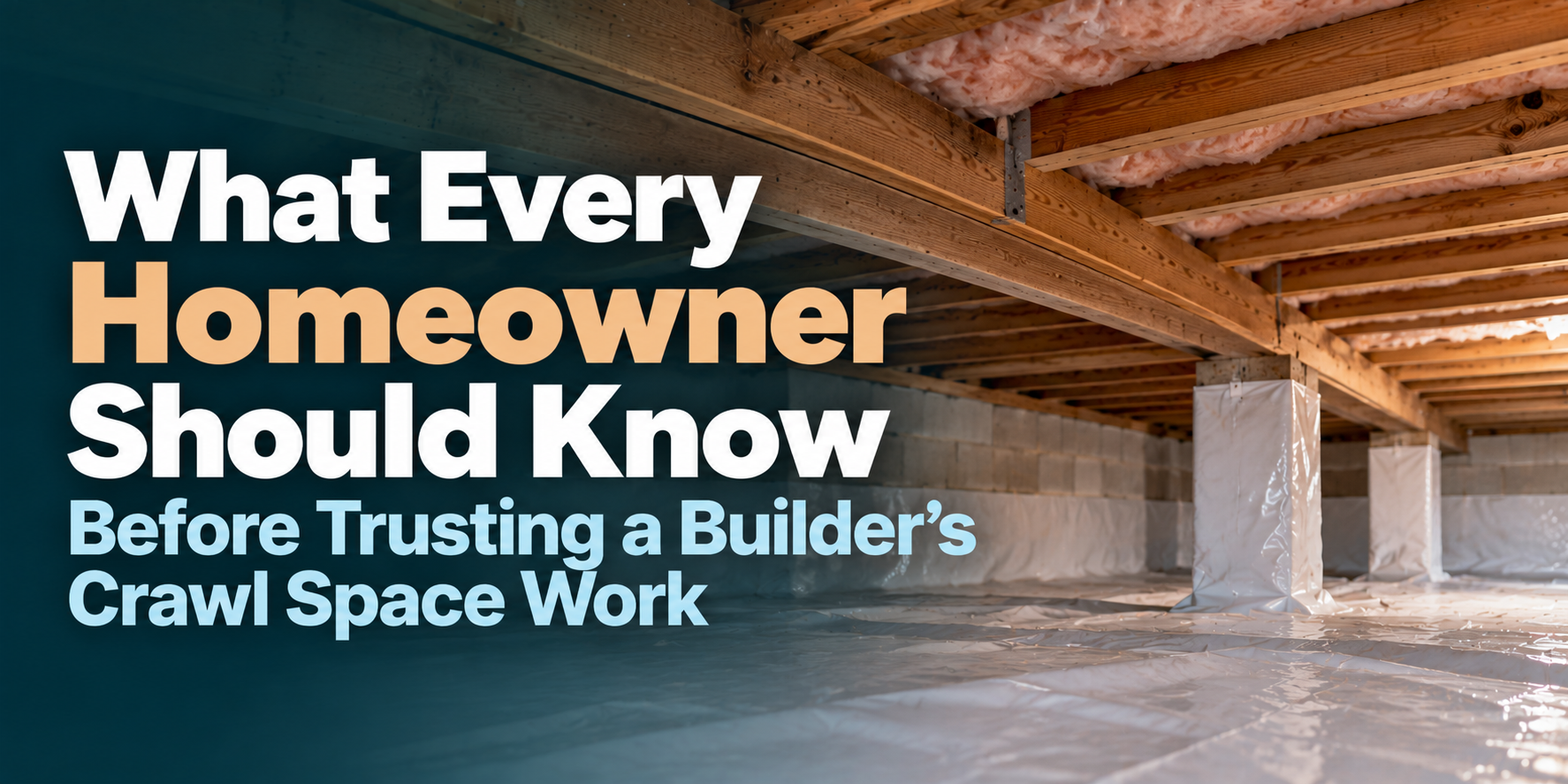
Now it's clean. The joists are treated and clear. The liner is tight and sealed. The dehumidifier is running quietly in the corner. And that 37% humidity reading shows the air quality is exactly where it should be.
The homeowner doesn't have to worry about moisture damage anymore. They don't have to deal with musty smells creeping into the house. And they're not going to see their energy bills climb because their HVAC is working overtime to fight the humidity.
This is what a finished crawl space should look like. Not just covered up. Actually fixed.
The Maintenance Commitment
A lot of companies finish the job and you never see them again. That's not how we do it.
We come back every year to check on the crawl space. We make sure the dehumidifier is running properly. We look for any new issues that might have come up. We check the humidity levels and make sure everything is still performing the way it should.
That yearly maintenance is part of working with Crawl Logic. It's not an upsell. It's how we make sure the work we did keeps protecting your home long-term.
When you're investing thousands of dollars in crawl space work, you deserve to know it's going to last. And you deserve a company that sticks around to make sure it does.
What Homeowners Should Look For
If you've had encapsulation work done, or you're thinking about getting it done, here's what you should know.
Your humidity should stay between 30% and 50% year-round. If it's climbing above 60%, something's not working right. Either the dehumidifier isn't keeping up, or the encapsulation isn't sealed properly, or both.
You shouldn't smell anything musty coming from your crawl space. If you do, that's a sign of moisture problems that aren't being controlled.
Ask your contractor what materials they're using. A 6 mil liner is not the same as a 125 mil liner. A cheap dehumidifier from the hardware store is not the same as a unit designed for crawl spaces.
And ask what happens after the job is done. Do they come back and check their work? Do they offer maintenance? Or are they gone the second the check clears?
The answers to those questions will tell you a lot about who you're working with.

Ready to Get Your Crawl Space Right?
If you have questions about humidity levels, encapsulation, or what's going on under your house, reach out. I'm happy to walk you through it.
We offer free inspections for homeowners in the Nashville area and surrounding counties like Bellevue, Brentwood, Franklin, and beyond. I handle all the inspections personally. No salespeople. No pressure. Just an honest assessment of what you're dealing with and what it'll take to fix it.
You can call or text me directly. I'll answer your questions, show you what we find, and give you options that make sense for your home.
That's how we do business at Crawl Logic.