Why Encapsulating Over Fungus Makes It Worse
Introduction
Encapsulation Didn’t Fix the Real Problem
THE LINER WAS NEW. THE WOOD WAS STILL COVERED IN FUNGUS
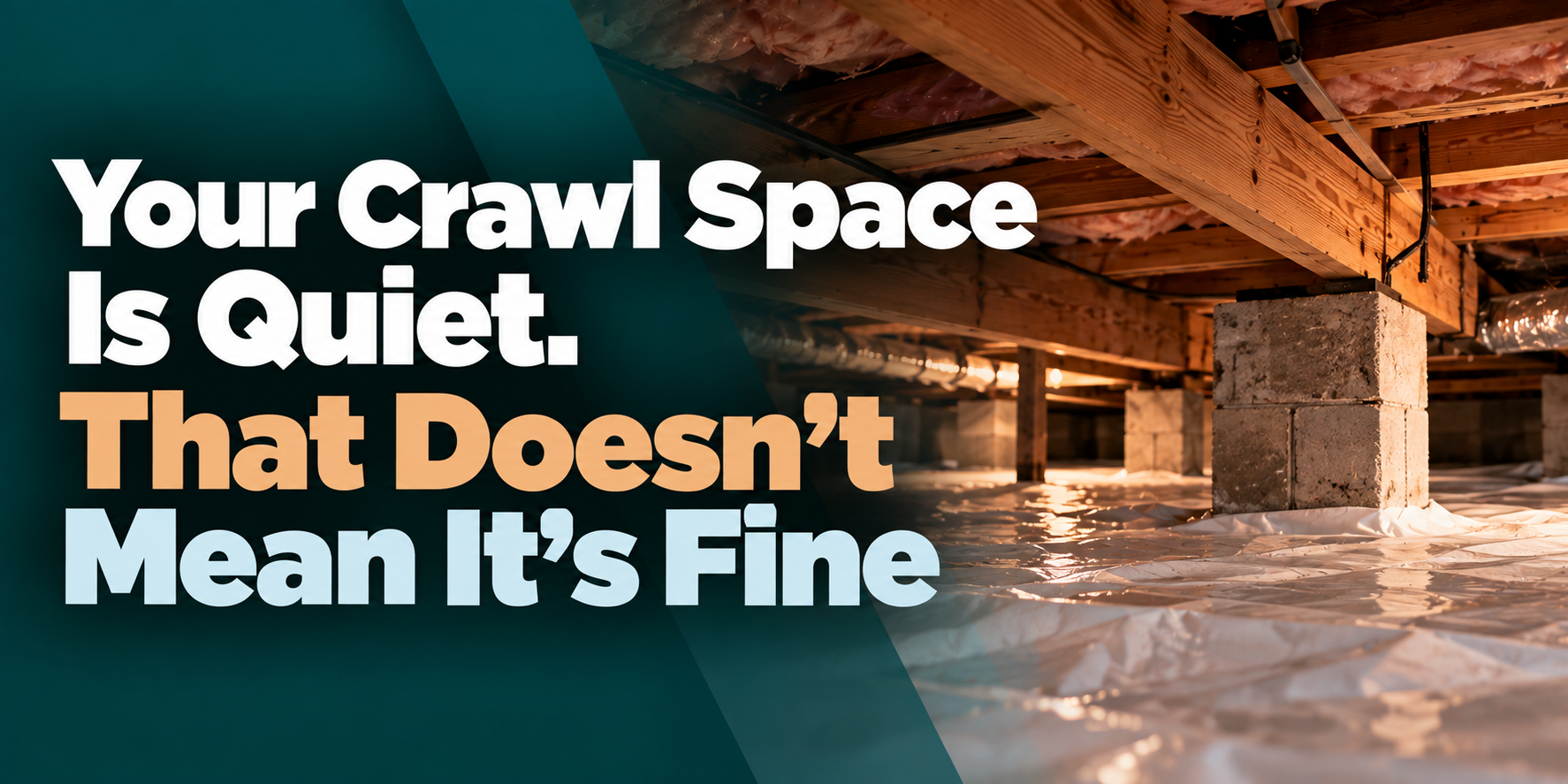
We walked under a house recently that had already been encapsulated.
Big national company. Recognizable name. The liner was down, the job was done, the check had been cashed.
But nobody touched the wood.
And the wood was covered in fungus.

That's Not a Small Mistake
Encapsulation is supposed to solve the moisture problem in your crawl space. Control the moisture, and you stop the conditions that let fungus grow in the first place.
But here's the thing — encapsulation controls moisture going forward. It doesn't go back in time.
If fungus is already living on your wood when the liner goes down, it's still there after. You've just sealed it in.


What Fungus Actually Does to Your Crawl Space
Fungus grows on wood when there's too much moisture. That's almost always the root cause in a crawl space — poor ventilation, groundwater, humidity that has nowhere to go.
Left alone, fungus breaks wood down. That's its job. It feeds on the organic material in the wood fibers, and over time, the wood gets weaker.
We're talking about the wood that holds up your floor. Your subfloor. Your floor joists. The structure underneath everything you walk on every day.
Fungus on that wood isn't a cosmetic problem. It's a structural one.
Why Sealing Over It Makes Things Worse
When you encapsulate a crawl space the right way, you're creating a sealed, controlled environment. Moisture levels drop. The conditions that fungus needs to survive get cut off.
But if fungus is already present on the wood before you seal the space, you haven't cut off its food source. The wood is still there. And now the space is sealed.
You've essentially created a contained environment around an active problem.
The liner looks clean. The job looks done. But underneath it, the wood is still breaking down — just out of sight now.
That's worse than doing nothing. At least before the liner went down, someone could see it.
Why This Keeps Happening
It's not always negligence. Sometimes it's just the way large companies are built.
The person who sells the job isn't the person who does the job. The person who does the job has no relationship with the homeowner. And the person who could hold everyone accountable — the owner — never sees the finished crawl space.
So corners get cut. Steps get skipped. And the homeowner has no way of knowing because they're not going under their house to check.
That's the gap. And fungus lives in that gap.
What Should Have Happened
Before any liner goes down, the wood needs to be inspected. If there's fungus present, it needs to be treated and remediated first. Removed where possible. Treated where it's not.
Then you encapsulate.
In that order. Not the other way around.
It costs more time. It costs more labor. But it's the only way the job actually solves the problem instead of hiding it.
One Question Worth Asking
Before you hire anyone to encapsulate your crawl space, ask them this:
What do you do if you find fungus on the wood during the inspection?
A contractor who knows what they're doing will have a clear, immediate answer. They'll tell you exactly how they handle it, what the remediation process looks like, and how you'll know it was done.
If they hesitate, or if the answer is vague, keep looking.
The job isn't just laying a liner. The job is fixing what's under your house.

Got Question About Your Crawl Space?
If you're dealing with humidity issues, or if you had work done and you're not sure it's actually working, give me a call. I'll come out, take a look, and give you an honest assessment of what's going on.
No pressure. No sales pitch. Just straight answers about what your crawl space needs.