
A Less Than 5-Minute Fix That Keeps Your Crawl Space Equipment Running Right
Introduction
Simple Crawl Space Maintenance Most Homeowners Forget
WHY DEHUMIDIFIERS STILL NEED OCCASIONAL CHECKS
I was down in a crawl space yesterday replacing a frost sensor on a dehumidifier.
Took me about five minutes.
The unit was four years old, and the sensor had done its job for as long as it could.
Time for a new one.
Pop the cover off.
Disconnect the old sensor.
Unwrap it from around the coil.
Wrap the new one in place. Plug it back in. Done.
It's one of those simple maintenance things that most people never think about.
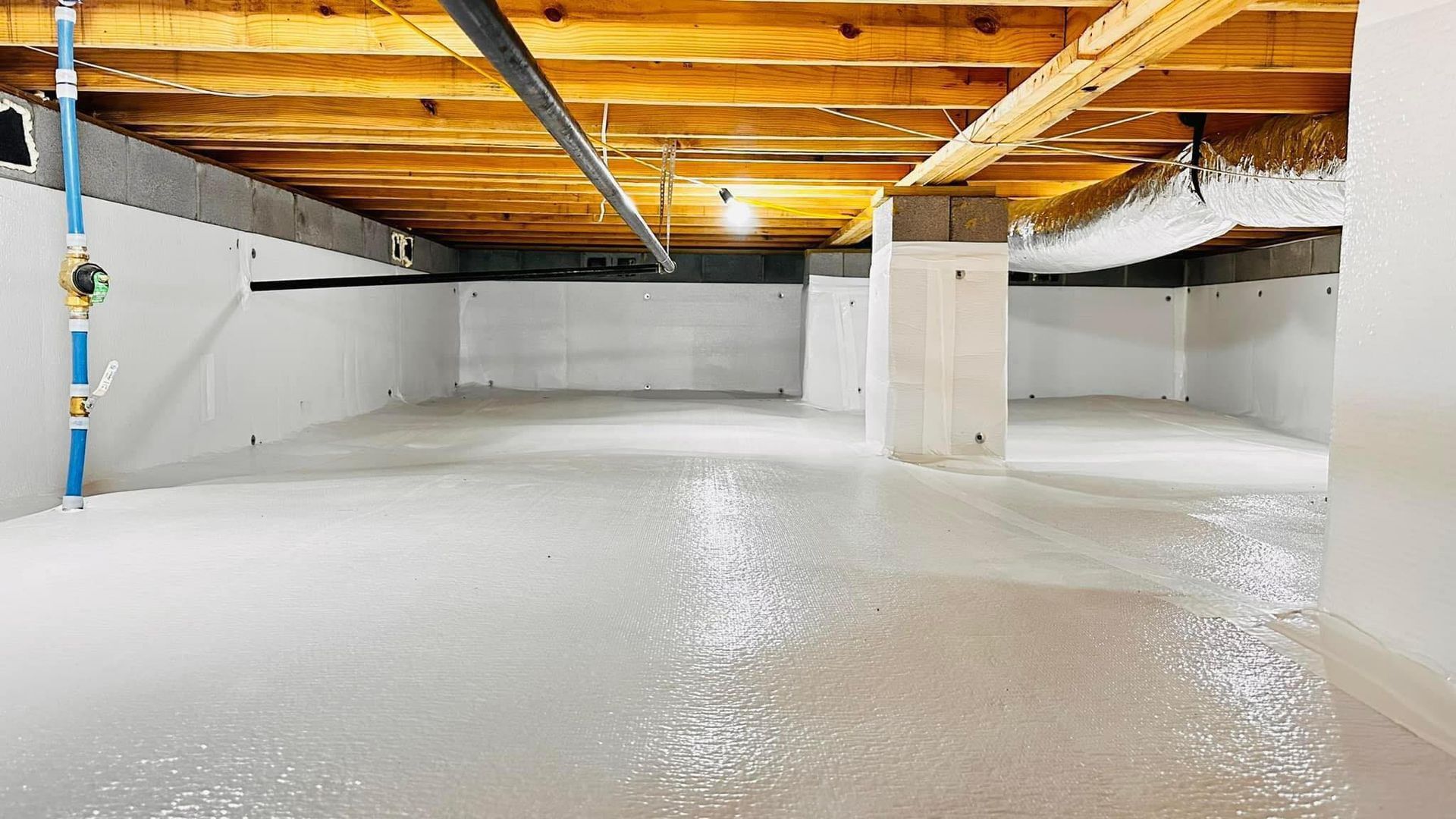
You get your crawl space encapsulated, we install a dehumidifier, and then you forget it's even down there.
And I get it - out of sight, out of mind.
But that dehumidifier is working hard every single day to keep your crawl space dry.
And just like any piece of equipment, it needs a little attention every now and then to keep doing its job right.
What a Frost Sensor Does
So what exactly is a frost sensor, and why does it matter?
Your dehumidifier pulls moisture out of the air in your crawl space. When it does that, the coils inside the unit can get cold - really cold. Cold enough to freeze up if the conditions are right.
That's where the frost sensor comes in. It monitors the temperature of those coils and tells the dehumidifier when to back off so it doesn't freeze itself. If the sensor detects things getting too cold, it shuts the unit down temporarily to let everything warm back up.
It's a small part, but it's got a big job. Without a working frost sensor, your dehumidifier can freeze up and stop working. Or it might run constantly when it shouldn't. Either way, you've got a problem.
When the sensor fails, your dehumidifier can't regulate itself properly. And if your dehumidifier isn't working right, your crawl space isn't staying dry. That's when moisture starts creeping back in, and that's when you start getting problems again.
Why Frost Sensors Need Replacing
Frost sensors don't last forever. They're electronic components that sit in a humid environment and work constantly. Over time, they wear out.
This particular sensor was four years old. That's actually pretty decent life for a part that's doing this much work. Some last longer, some fail sooner. It depends on how hard your dehumidifier has to work and what conditions it's dealing with.
When a frost sensor starts to go bad, you might not notice right away. Your dehumidifier might still run, but it's not operating the way it should. Maybe it's cycling on and off more than normal. Maybe it's running constantly without ever taking a break. Maybe it's shutting down when your crawl space actually needs it working.
Eventually, a bad sensor will cause bigger problems. Your unit could freeze up completely. It could stop running altogether. Or it could keep running but stop actually removing moisture from the air.
And here's the thing - by the time you notice something's wrong, you've probably already got moisture building up again. That's why catching these problems early matters.
How Simple the Replacement Actually Is
I'm showing you this repair because it's not complicated. If you're handy and comfortable working with basic equipment, this is something you could potentially do yourself.
First, you pop the cover off the dehumidifier. Usually just a few screws or clips, depending on the model.
Then you find the frost sensor. It's a small wire with a sensor on the end, and it's wrapped around the coil inside the unit. You disconnect it from the plug - just pull it out, nothing fancy.
Next, you unwrap the old sensor from around the coil. It's usually held in place with a little clip or it's just tucked in there. Pull it off carefully so you don't damage anything else.
Then you take your new sensor and wrap it around the coil in the same spot where the old one was. Make sure it's making good contact with the coil - that's important for it to read the temperature correctly.
Plug the new sensor back into the connection. Put the cover back on. That's it.
Like I said, about five minutes if you know what you're doing. Maybe ten if it's your first time and you're being careful.
The Bigger Problem: People Forget About Their Dehumidifiers
Here's what I see all the time: we finish an encapsulation job, install a quality dehumidifier, show the homeowner how everything works, and then we never hear from them again. Which in some ways is good - it means everything's working.
But the problem is, most people never go back down into their crawl space after we're done. They don't check on the dehumidifier. They don't look at the filter. They don't make sure it's still running the way it should.
That dehumidifier is working every single day to keep moisture levels where they need to be. It's pulling humidity out of the air constantly. And just like your HVAC system or your water heater, it needs some basic maintenance to keep doing that job.
Filters get dirty and restrict airflow. Sensors wear out and stop regulating properly. Drain lines can get clogged. Small issues that are easy to fix become big problems if nobody's paying attention.
Then one day, maybe a year or two later, you start smelling that musty odor again. Or you notice your floors feel different. Or you see condensation where you shouldn't. And you wonder what happened - didn't we fix this?
The encapsulation is still fine. The problem is the equipment that's supposed to be maintaining it got neglected.
What Regular Maintenance Looks Like
Look, I'm not saying you need to be down in your crawl space every week. But every few months, it's worth taking five minutes to check on things.
Go down there and look at your dehumidifier. Is it running? Is the display showing normal readings? Does anything look or smell off?
Check the filter. Most dehumidifiers have a filter that catches dust and debris. If it's dirty, clean it or replace it. A clogged filter makes your unit work harder and removes moisture less efficiently.
Make sure the drain line is clear and water is actually draining out. If you've got a dehumidifier that drains into a pump or a drain line, make sure that's working. Standing water around the unit is a problem.
Listen to how it's running. Does it sound normal, or is it making weird noises? Is it cycling on and off like it should, or is it running constantly without stopping?
These simple checks catch problems early. A dirty filter is easy to clean. A failing sensor is cheap to replace. Waiting until your dehumidifier completely fails and moisture is back in your crawl space - that's expensive.
Why We Include Maintenance Checks
When we do crawl space work, we're not just trying to get the job done and move on. We want that encapsulation to still be working perfectly five, ten, fifteen years from now.
That's why we include maintenance checks as part of how we take care of our customers. We want to catch these small issues before they become big ones.
If we installed your dehumidifier, we know exactly what model it is and how it should be running. We can spot problems you might not notice. And we can fix them before they cost you money or let moisture back into your crawl space.
A frost sensor costs maybe twenty or thirty dollars and takes five minutes to replace. Dealing with mold and structural damage because your dehumidifier stopped working and nobody noticed for six months - that's thousands of dollars.
We'd rather catch it early. That's just good business and the right way to treat people.
What Homeowners Can Do
Set yourself a reminder. Every three months, go check your crawl space. Look at your dehumidifier. Make sure everything looks normal.
Know where your dehumidifier is and how to get to it. Some crawl spaces are easier to access than others, but you should at least be able to get down there and take a look.
Learn what normal looks like for your equipment. What should the humidity reading be? What does it sound like when it's running properly? The better you know your system, the easier it is to spot when something's off.
And if you're not comfortable doing maintenance yourself, that's fine. Just don't ignore it completely. Call us or call whoever installed your system and have them come check it out.
The worst thing you can do is nothing. Your crawl space encapsulation is an investment in your home. Protect that investment with a little basic maintenance.

Get Your Dehumidifier Checked
We do free maintenance checks on crawl space dehumidifiers. Whether we installed it or someone else did, we'll come take a look and make sure everything's working the way it should.
If something needs attention, we'll tell you what it is and what it'll cost to fix. No surprises, no pressure. Just straight answers about what your equipment needs.
It's better to catch these things early. A simple repair now beats an expensive problem later.
If you've got an encapsulated crawl space and you can't remember the last time you checked on your dehumidifier, reach out. Let's make sure everything's still doing its job and keeping your crawl space dry.