How Crawl Space Drainage Actually Works
Introduction
Understanding Water in Your Crawl Space
THE BASICS EVERY HOMEOWNER SHOULD KNOW
My first crawl space inspection in Pensacola taught me something I already knew: poor drainage work isn't just a Nashville problem.
It's everywhere.
I found a job done by one of those big three-letter companies - you know the ones with the billboards - and it had every drainage mistake in the book.
Here's the thing about crawl space drainage: it's not complicated, but it has to be done right.
When it's not, you end up with water problems, moisture issues, and eventually structural damage.
The job I looked at in Pensacola?
The drainage was literally sitting above ground, not doing anything.
Missing a sump pump. Water with nowhere to go.
Let me walk you through how this actually works, because understanding the basics helps you spot problems before they get worse.
The Three Entry Points for Water
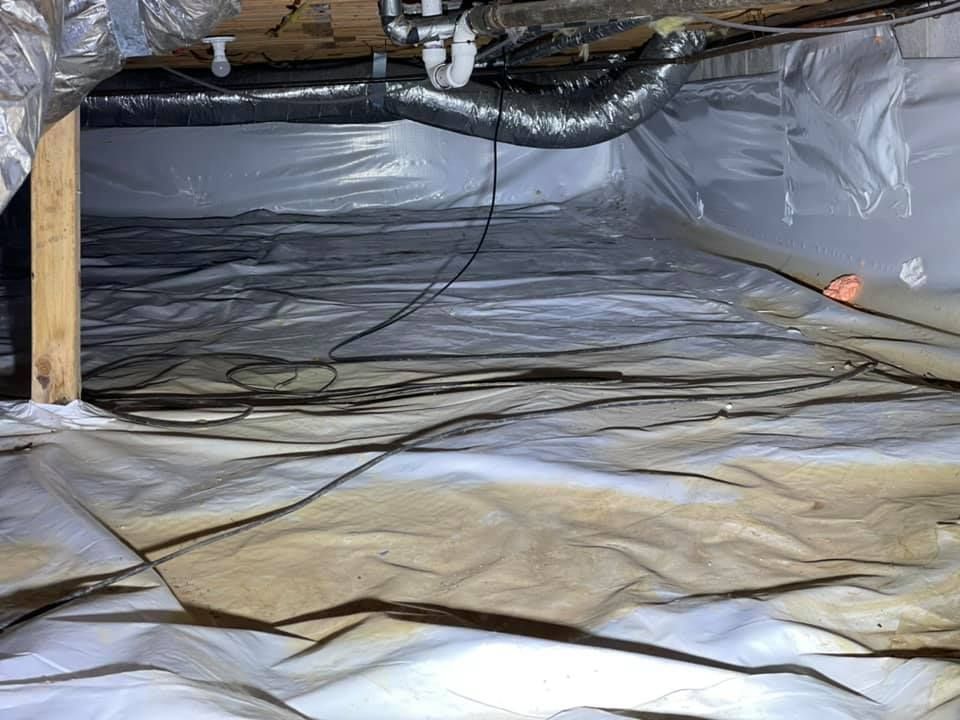
Water finds its way into your crawl space through three main paths. Think of it like this - your crawl space isn't trying to keep water out completely. It's trying to manage water that's naturally moving through the ground around your foundation.
First, there's the cove joint. That's where your footer meets your foundation wall. Water seeps through this connection naturally. It's not a flaw in construction - it's just how concrete and footers work together. Water follows the path of least resistance, and that joint is one of those paths.
Second, water comes right through your cinder block walls. Those blocks aren't solid - they're porous. Ground water pushes through them over time. You can't stop it, but you can manage where it goes once it gets through.
Third, water travels underneath your footer. The ground under your house isn't sealed off from the rest of the earth. Water moves through soil, and some of that water ends up under your foundation, working its way up into your crawl space.
That's three different entry points, all happening at ground level or below. And that's exactly why your drainage system needs to be positioned right at ground level - to catch water from all three sources and route it somewhere useful.
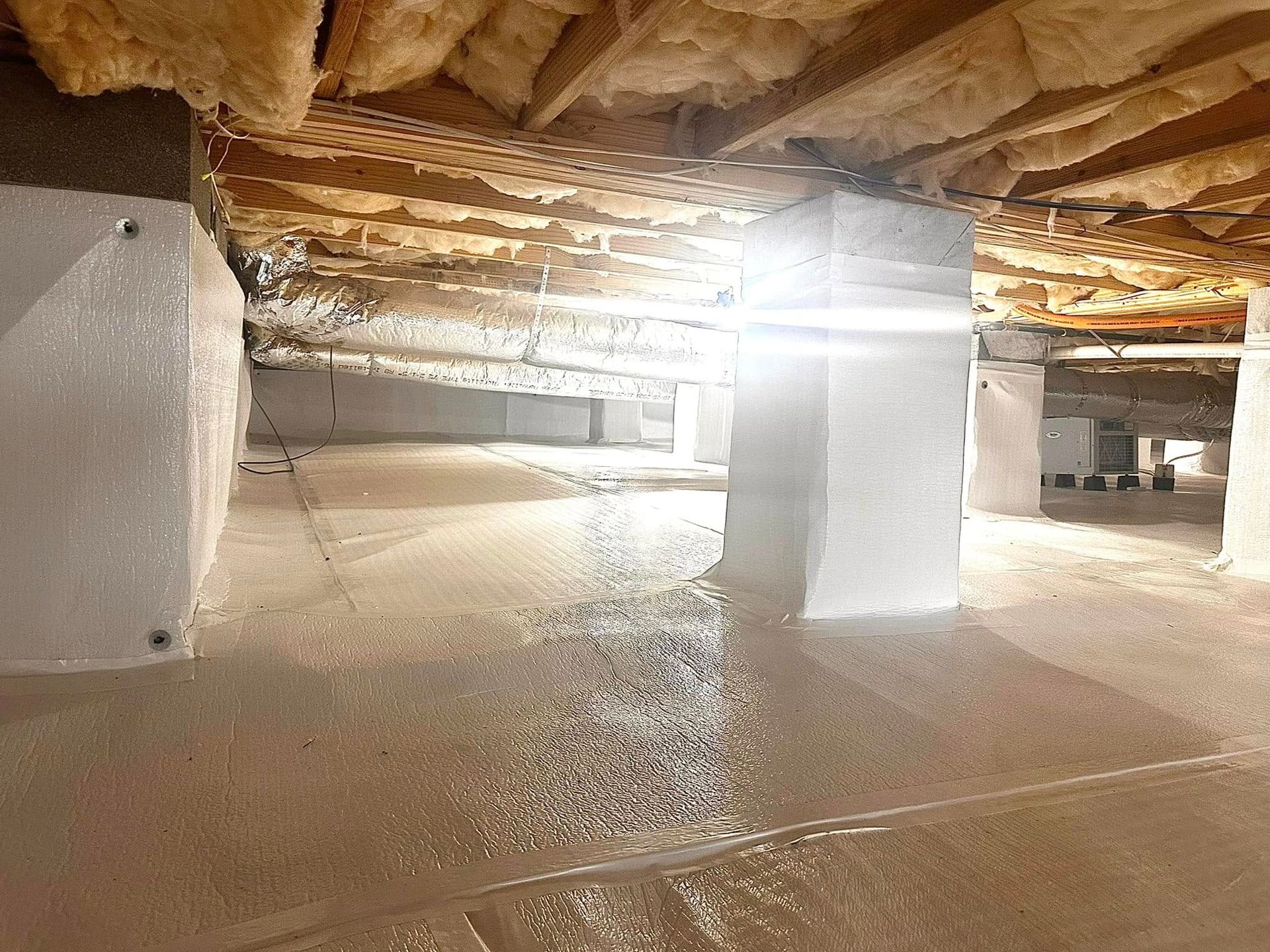
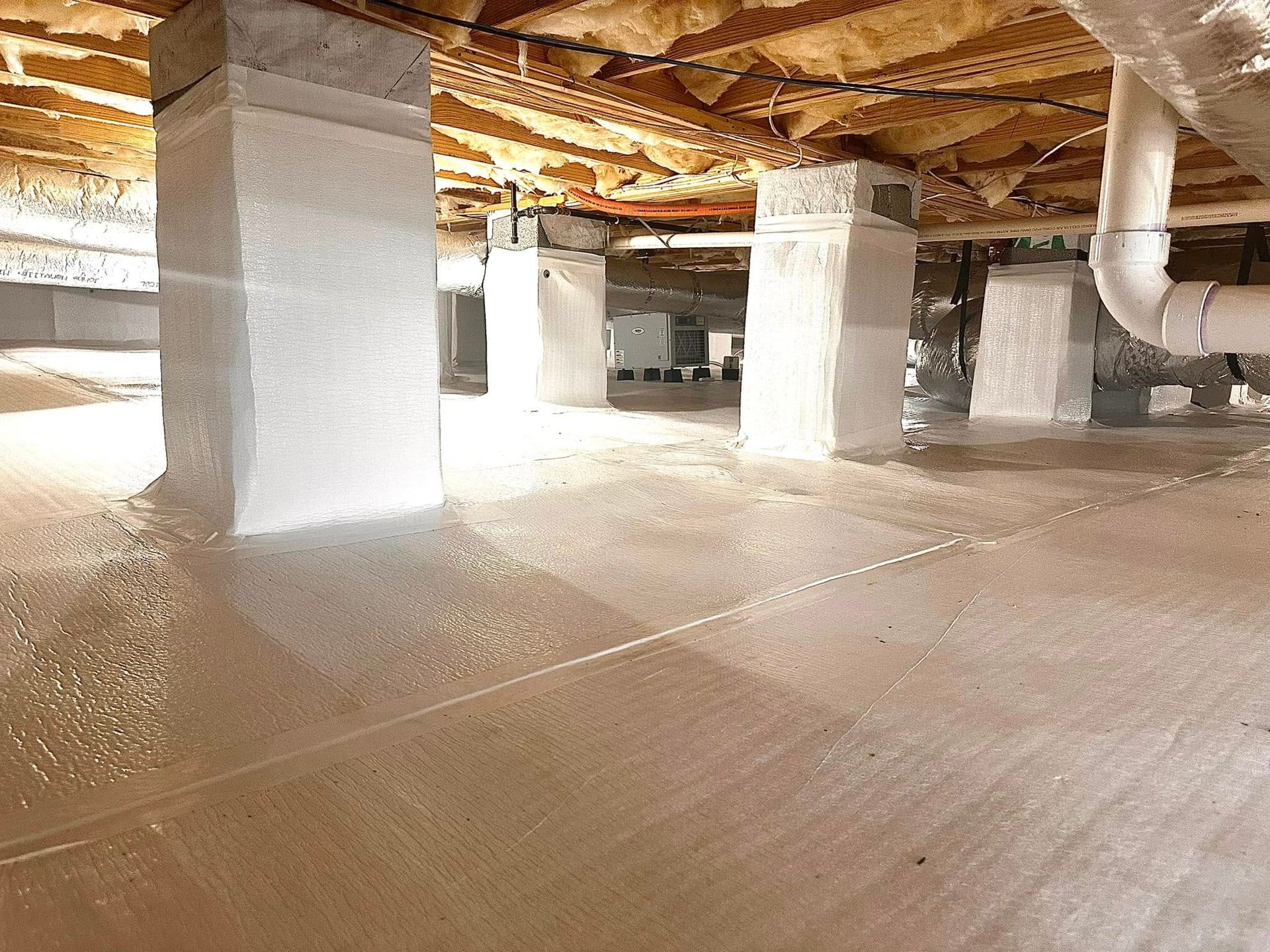
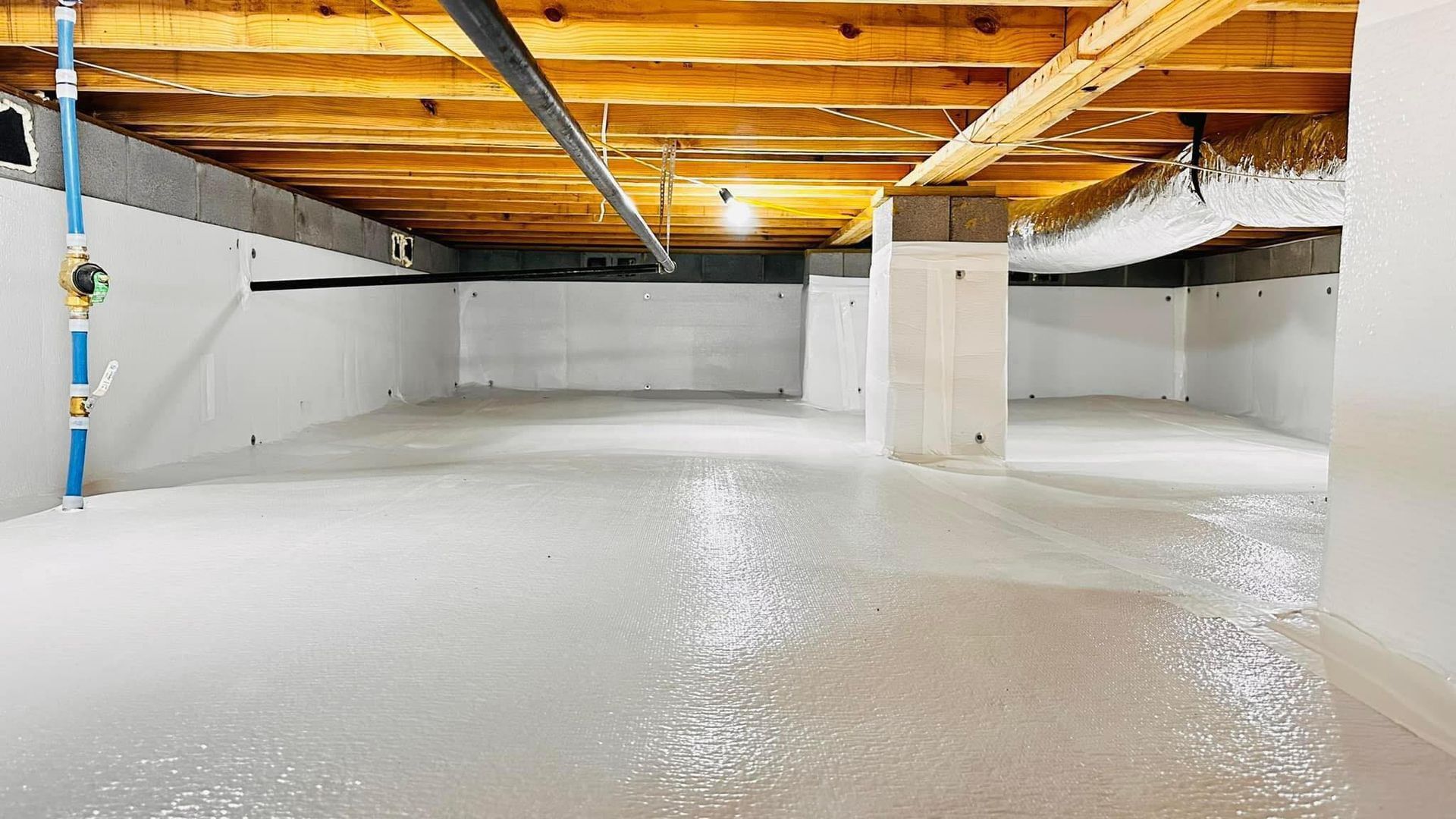
How Drainage Systems Should Work
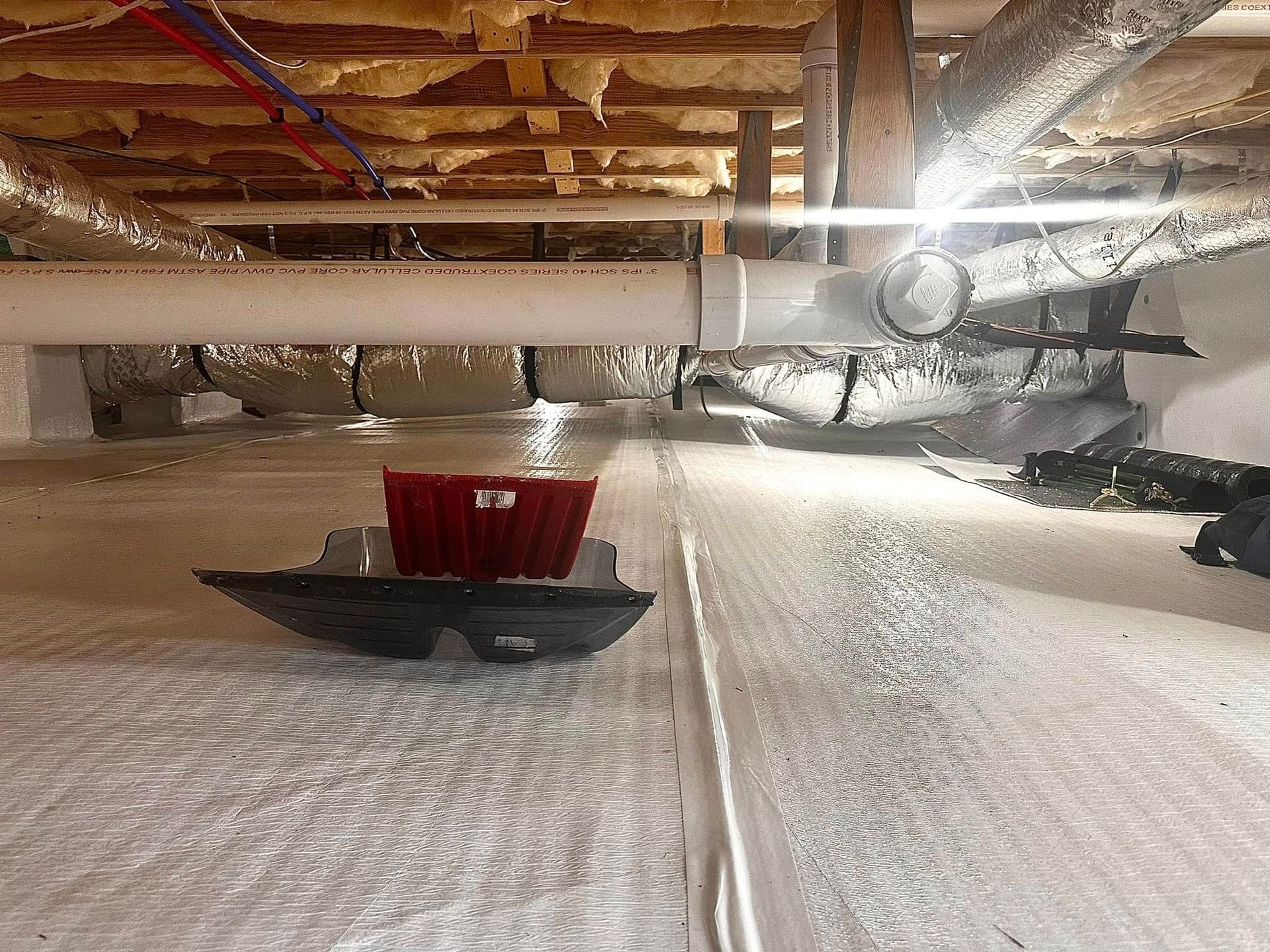
A proper drainage system does one simple job: it catches water from those three entry points and moves it to your sump pump. But to do that job, it needs to be installed correctly.
The drainage should sit level with the ground, creating a channel all the way around your crawl space perimeter. Think of it like a gutter system - water flows into the channel and follows it to the collection point. If your drainage is sitting above ground, it's not catching anything. The water just flows past it.
You also need enough sump pumps to handle your space. A small crawl space might only need one. Larger spaces need two, sometimes more. The goal is making sure water can actually reach a pump. If your drainage routes water 60 feet to a single pump, you're asking for problems. Water needs a clear path to the nearest collection point.
What I Found in Pensacola
The Pensacola job had every problem you don't want to see. The drainage was just laying on top of the ground in some sections - not doing its job at all. There should have been two sump pumps based on the size of the space, but there was only one. That means water on the far side of the crawl space had no practical way to get collected.
Even worse, the routing didn't follow the walls properly in some areas. Water needs to flow along the entire perimeter to get picked up by the drainage system. This installation had gaps where water would just pool instead of getting directed to the pump.
This wasn't some fly-by-night contractor either. This was a big company with name recognition, advertising budget, and supposedly trained crews. But the end result? A system that doesn't work the way it should.
Common Drainage Mistakes
Installing drainage above ground level is the most common mistake I see. It's faster to install that way - you don't have to dig a proper channel. But it completely defeats the purpose. Water enters at ground level or below. Your drainage needs to be there to catch it.
Insufficient sump pump coverage is another big one. Companies try to save money by using fewer pumps than the space actually needs. Water can only travel so far through a drainage system before it needs somewhere to go.
Poor routing happens when installers don't think about water flow. They might run drainage in a straight line instead of following the perimeter. Or they leave gaps in coverage. Water doesn't care about shortcuts - it goes where gravity takes it, and your drainage system needs to account for that.
Most of these mistakes come down to rushing the job or cutting corners to increase profit margins. A company focused on moving fast and hitting sales numbers isn't focused on whether the system actually works five years from now.
The Big Company Problem
Here's what I've learned after 12 years in this business: even the big companies with massive advertising budgets get this wrong. Why? Because their focus is on sales volume, not quality installation.
When you've got commission-based salespeople and crews that need to finish multiple jobs per day, something has to give. Usually, it's the details that actually matter - like digging proper channels and installing adequate sump pumps.
The training at these companies is minimal. A few weeks and you're considered qualified to design and install drainage systems. There's no real accountability for whether the system works long-term. By the time problems show up, that crew has moved on to hundreds of other jobs.
What Proper Installation Looks Like
A correctly installed drainage system starts with creating channels at ground level around your entire crawl space perimeter. This takes time and actual digging work - you can't just lay pipe on top of the dirt.
The system needs complete coverage with no gaps. Water should be able to enter the drainage from any point along your foundation walls. That means following the perimeter closely and making sure the channel connects properly.
Sump pumps get positioned based on your space size and layout. Larger crawl spaces need multiple pumps so water doesn't have to travel too far. Each pump needs to be accessible for maintenance and properly connected to discharge water away from your foundation.
Quality control means checking the work before calling it done. Does water actually flow to the collection points? Are there any gaps in coverage? Is everything positioned correctly? These aren't optional steps - they're what separates functional systems from expensive mistakes.
How to Evaluate Your Drainage System
If you already have drainage installed, here's what to look for. First, is it sitting at ground level or above? If you can see daylight under your drainage pipe, it's not positioned correctly.
Check for standing water in your crawl space, especially after heavy rain. Water pooling away from your sump pump means your drainage isn't reaching those areas.
Look at your sump pump locations. Do they make sense for your space size? Can water realistically flow from the far corners to reach them?
If you're getting a new system quoted, ask detailed questions. How many sump pumps? Where will they be positioned? Will channels be dug at ground level? How does the routing work? A contractor who knows what they're doing can answer these clearly.

Ready to Get Your Drainage Done Right?
If you're dealing with water in your crawl space, or you're concerned about existing drainage that isn't working, let's take a look. I'll show you exactly what's happening with complete documentation and explain what actually needs to happen to fix it.
No sales pressure, no laptop presentations. Just honest assessment of your drainage situation and clear solutions.
Give us a call for a free inspection. We're now serving Pensacola along with our Tennessee locations.