How Sweating Ducts Signal a Bigger Problem Under Your House
Introduction
That Moisture on Your Ductwork Isn't Normal
WHAT SWEATING DUCTWORK REALLY MEANS
I was out in Fairview yesterday doing a crawl space inspection, and the homeowner had no idea there was a problem until I showed them what was happening with their ductwork. It was covered in moisture. Dripping wet. And that's not something you want to see under your house.
When ductwork sweats like that, it's telling you something important. Your crawl space has a humidity problem. And if you've got a humidity problem, you've got the perfect conditions for mold, fungus, wood rot, and a whole list of issues that only get worse over time.
A lot of homeowners don't know what they're looking at when they see condensation on their ducts. They figure it's just part of having a crawl space. It's not. It's a clear sign that the environment under your house needs to be addressed before you're dealing with expensive repairs down the road.
The Science Behind Sweating Ductwork
Here's what's actually happening when you see moisture on your ductwork.
Your HVAC ducts are carrying cold air through your crawl space. That air is somewhere around 55 to 60 degrees. Meanwhile, the air in your crawl space during the summer is hot and humid. We're talking 80, 85, 90 degrees with humidity levels way too high.
When that hot, humid air comes in contact with the cold surface of your ductwork, condensation forms. It's the exact same thing that happens when you take a glass of ice water and set it outside on a hot day. Within minutes, the outside of that glass is covered in water.
The threshold where ductwork starts to sweat is around 60 to 70% relative humidity. That's also right around the point where fungus starts to grow, which is at 65%. So if your ducts are sweating, you're not just dealing with condensation. You're dealing with conditions that support mold and rot.
This isn't a small issue. It's a sign that the entire environment under your house is wrong.
It's Not Just a Moisture Issue
Most people see the moisture and think it's just a little condensation. But it's affecting more than you realize.
First, it's costing you money. Your HVAC system is working harder than it should because it's trying to cool your home while fighting against all that humidity. Cold air is traveling through ducts that are surrounded by hot, wet air. That's not efficient. Your system has to run longer. Your energy bills go up. And your equipment wears out faster.
Second, that moisture doesn't just disappear. It drips. It saturates your insulation. It gets onto your floor joists. It creates the perfect breeding ground for mold and fungus. Over time, that moisture can cause serious structural damage to the wood under your house.
And third, the air from your crawl space doesn't stay in your crawl space. A lot of the air you're breathing inside your home comes from underneath it. If the air down there is full of moisture and mold spores, that's making its way upstairs.
This is why I always tell homeowners that sweating ductwork isn't just a crawl space problem. It's an energy problem, a health problem, and eventually, a structural problem.
What Happens When You Ignore It
I've been under a lot of houses where homeowners knew something was off but didn't do anything about it. Maybe they saw the moisture and figured it would dry out on its own. Maybe they didn't realize how serious it was. Either way, the problem doesn't fix itself.
At 65% relative humidity, fungus starts to grow. That's not much higher than the threshold where ductwork starts sweating. So if you're seeing condensation on your ducts, you're already in the danger zone.
That fungus doesn't just sit on the surface. It gets into your wood. It breaks down the structure. Over time, you're looking at floor joists that are soft, weak, and rotted. I've seen homes where the damage got so bad that the floors inside the house started sagging.
The moisture also destroys your insulation. Fiberglass insulation that gets wet is useless. It falls down, it holds moisture, and it becomes a breeding ground for mold. Once that happens, you're not just dealing with encapsulation anymore. You're dealing with insulation replacement, possible structural repairs, and a much bigger bill.
And the longer you wait, the worse it gets. Moisture doesn't go away on its own in an unconditioned crawl space. It accumulates. The damage spreads. What could have been a straightforward encapsulation job turns into something much more involved.
How Encapsulation Fixes the Problem
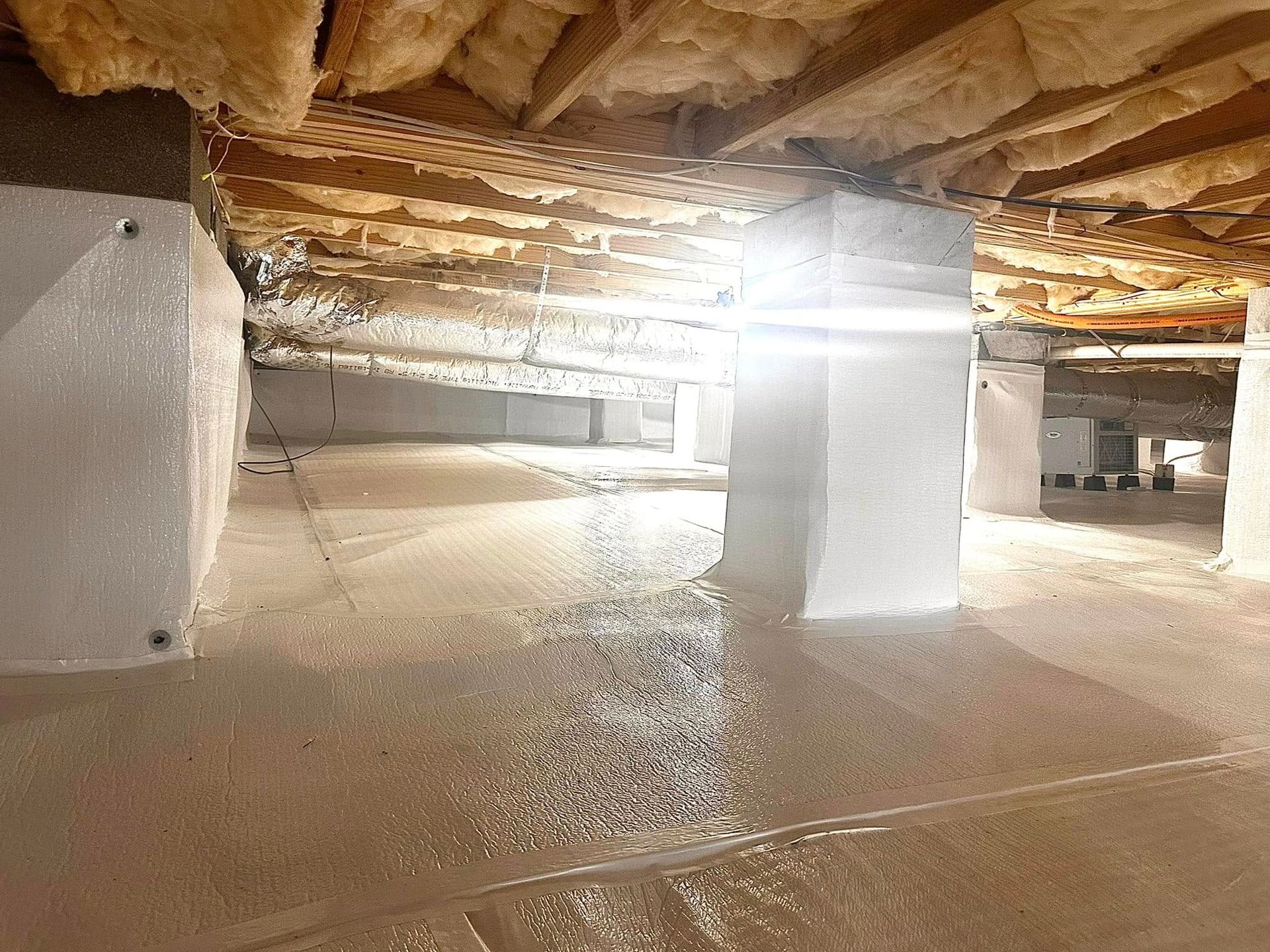
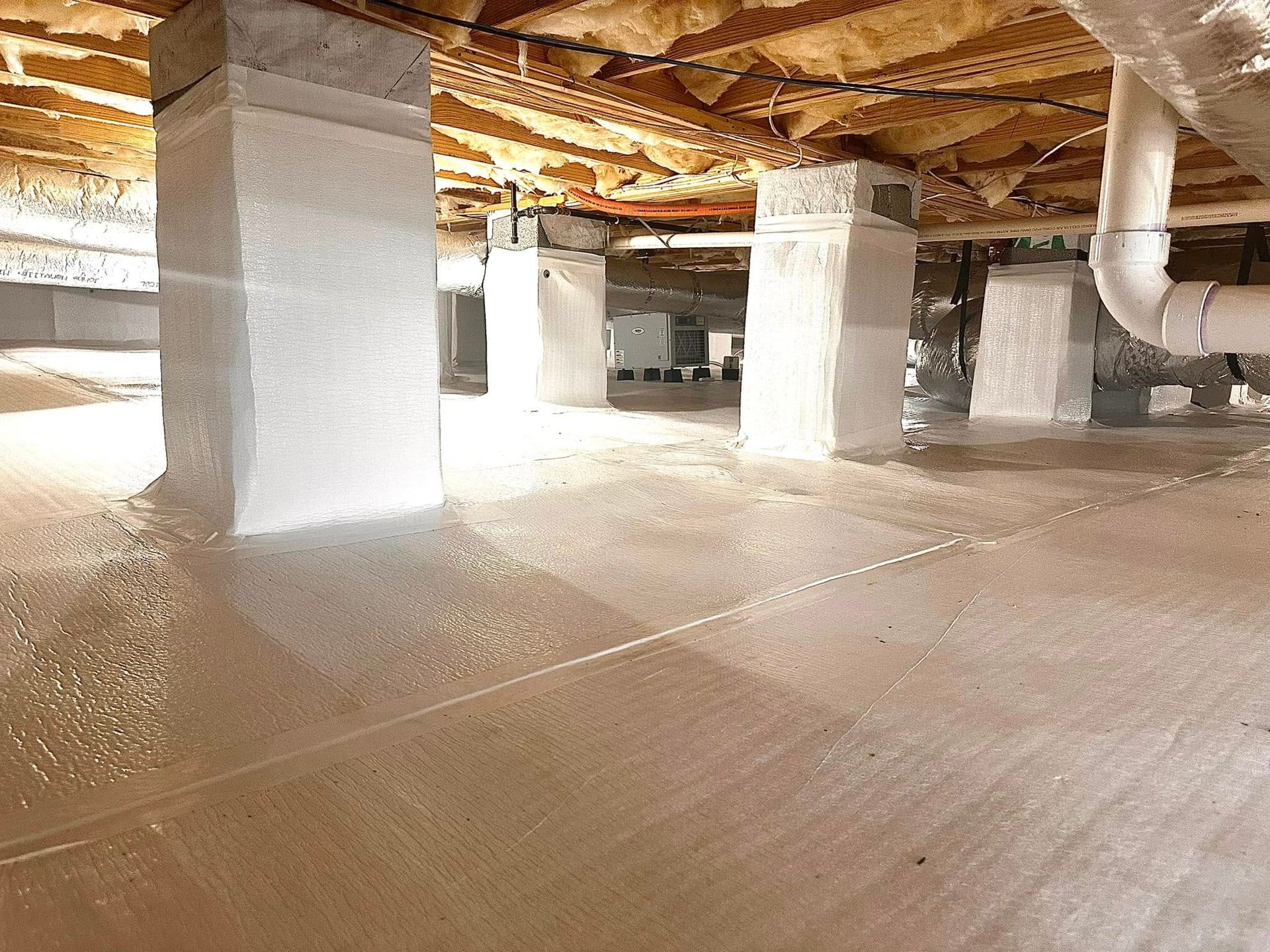
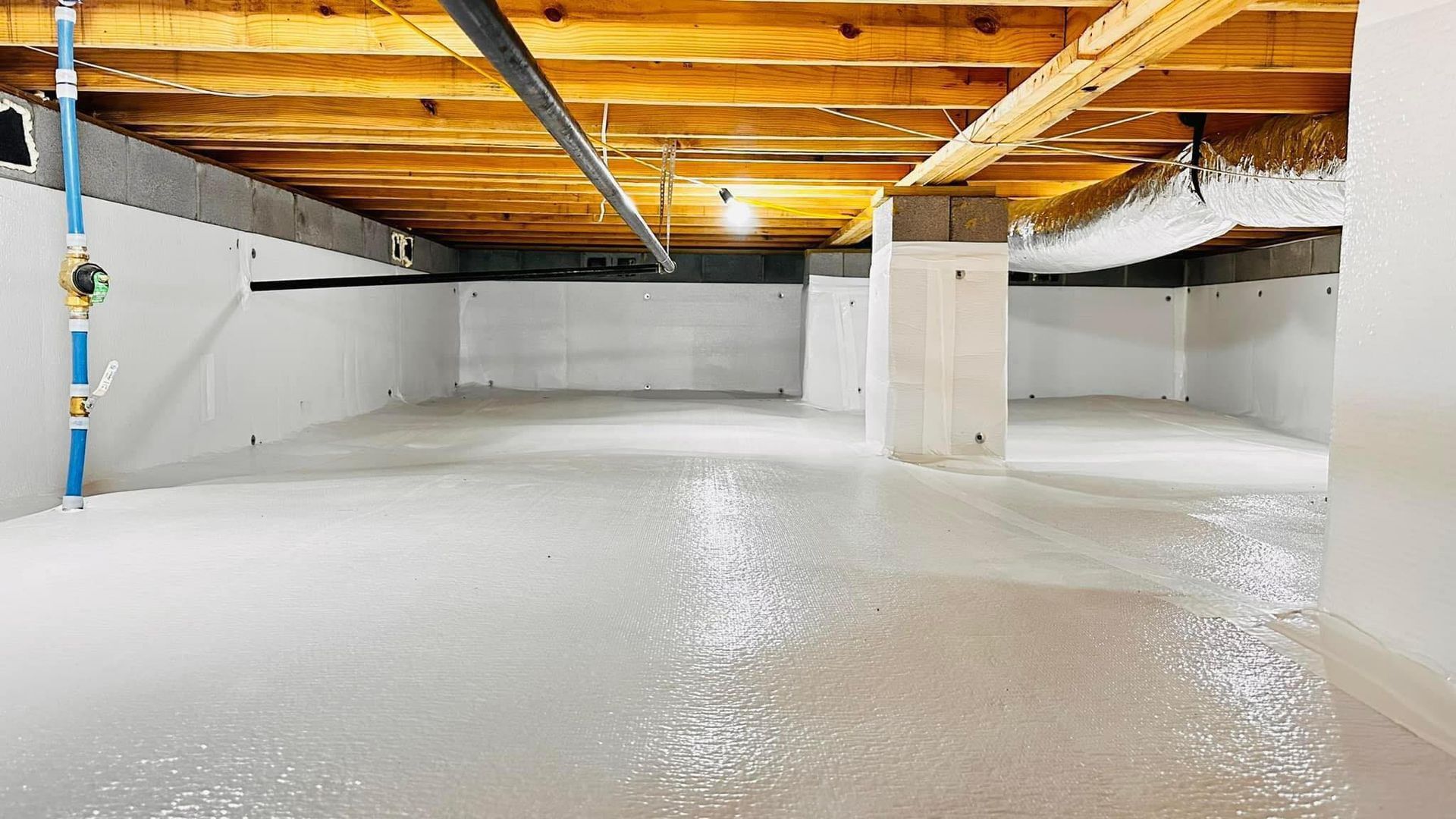
Encapsulation changes the entire environment under your house. Instead of treating your crawl space like the outside, we turn it into a sealed, controlled space.
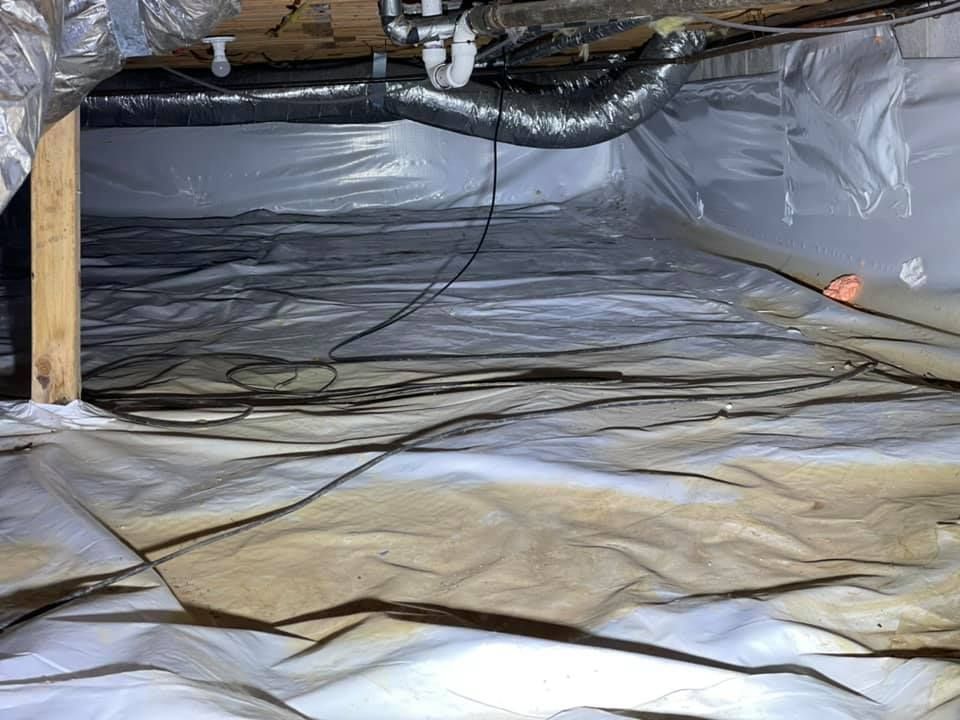
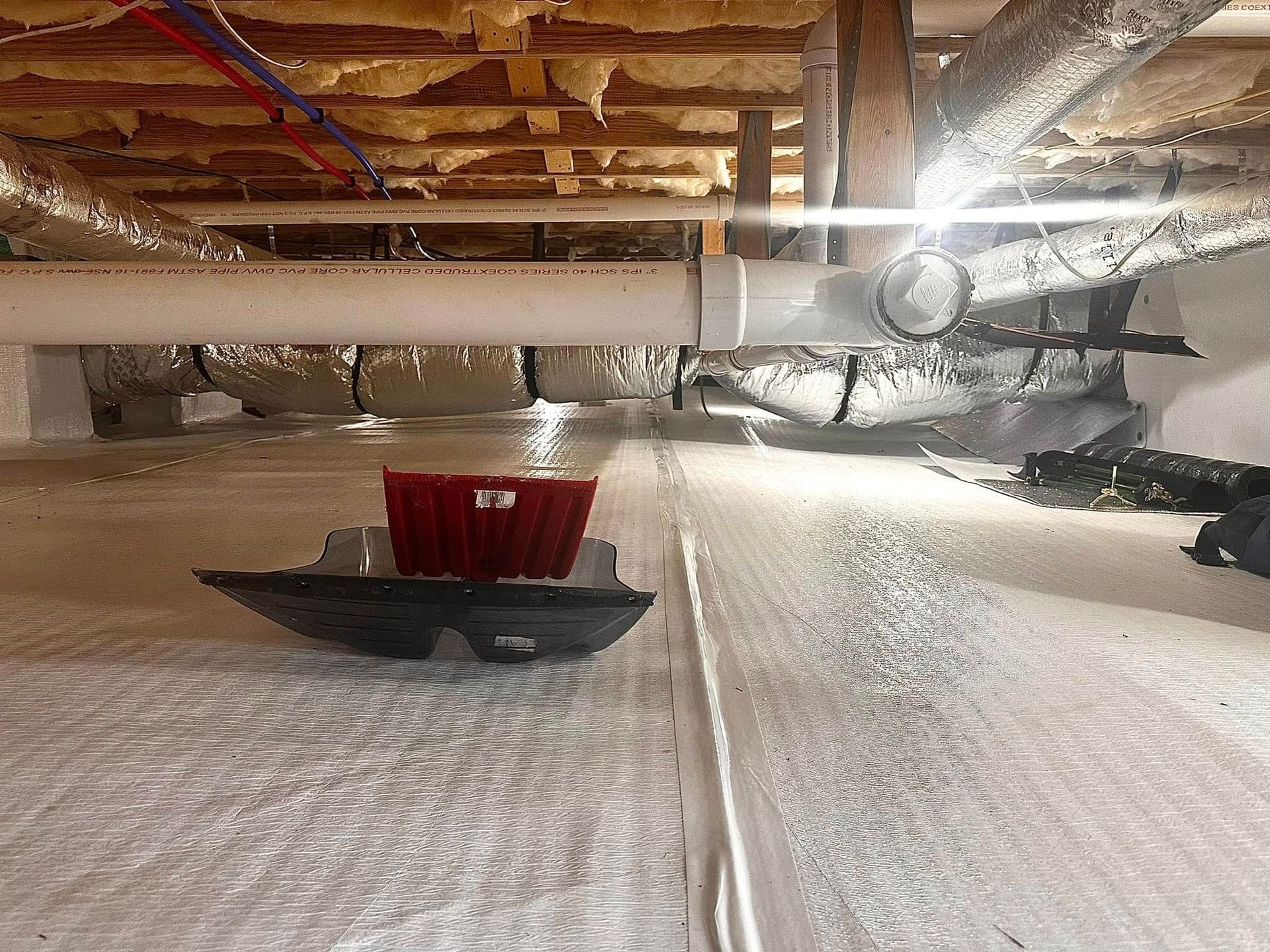
Here's what that means. We seal off all the vents. We cover the ground and walls with a heavy-duty vapor barrier. We bring in a dehumidifier that regulates the humidity level and keeps it where it needs to be year-round.
Once that's done, your crawl space isn't exposed to outside air anymore. No more hot, humid air coming in during the summer. No more cold, damp air in the winter. The space stays dry and controlled.
And that's when the ductwork stops sweating. Because now the air around those ducts isn't hot and humid. It's the same temperature and humidity level as the rest of the space. No temperature difference means no condensation. It's that simple.
But it only works if the encapsulation is done right. I've seen plenty of jobs where someone threw down some plastic and called it a day. That's not encapsulation. That's just covering the ground. Real encapsulation means sealing the space, controlling the humidity, and making sure the system works long-term.
What "Done Right" Actually Means
There's a big difference between basic crawl space work and high-level encapsulation. And that difference shows up in whether or not your ductwork stays dry five years down the road.
When we do an encapsulation job, we're not cutting corners. We use thick, durable vapor barriers. We seal every seam. We make sure the dehumidifier is sized correctly for the space and installed properly. We include things like MySpool Smart Sump Sensors so you know if your pump stops working before you have a problem.
We also take care of the details that most companies skip. Every job gets 10 to 20 LED lights installed so you can actually see what's under your house. If there are electrical needs, we handle it in-house. If there's structural work that needs to be done, our foreman Ozzy can take care of it without bringing in another contractor.
And I personally handle every inspection and every quote. I'm the one who looks at your crawl space, tells you what needs to be done, and makes sure the work is completed the way it should be. No sales guys. No subcontractors you've never met. Just me and my crew doing the work we've been doing for over a decade.
That's what it takes to make sure your ductwork never sweats again. Not just covering the problem, but actually fixing the environment that caused it in the first place.
What to Do If You See This Under Your House
If you've been under your house and seen moisture on your ductwork, don't ignore it. This isn't something that gets better on its own.
The first step is to get a professional inspection. Not just someone who's going to sell you something, but someone who actually knows what they're looking at and can give you an honest assessment of what's going on down there.
When I come out for an inspection, I'm looking at more than just the ductwork. I'm checking the humidity levels, looking at your floor joists, checking for standing water, seeing if there's any existing damage, and figuring out what it's going to take to fix the problem the right way.
I'll give you a clear explanation of what I found and what needs to be done. No pressure. No deposit required. Just straight information so you can make the right decision for your home.
And if you decide to move forward, we don't ask for money upfront. You pay when the job is done and you're happy with the work. That's how we've been doing business for six years, and it's why we've never had a bad review.
If you're in Nashville, Fairview, Brentwood, Franklin, or anywhere in the surrounding counties, give us a call. We'll come out, take a look, and let you know exactly what you're dealing with.

Seeing Moisture on Your Ductwork?
Don’t wait for a humidity problem to turn into mold, wood rot, or expensive structural repairs.
If your ductwork is sweating, we can inspect your crawl space, find out what’s causing it, and show you what it’ll take to fix the problem the right way.
Schedule your free crawl space inspection with Crawl Logic Nashville today.