
Your Crawl Space Was Encapsulated. But Is It Actually Working?
Introduction
The Job Is Done. The Problem Isn't.
ONE VISIT UNDER A FINISHED CRAWL SPACE SHOWED ME EVERYTHING WRONG WITH THIS INDUSTRY.
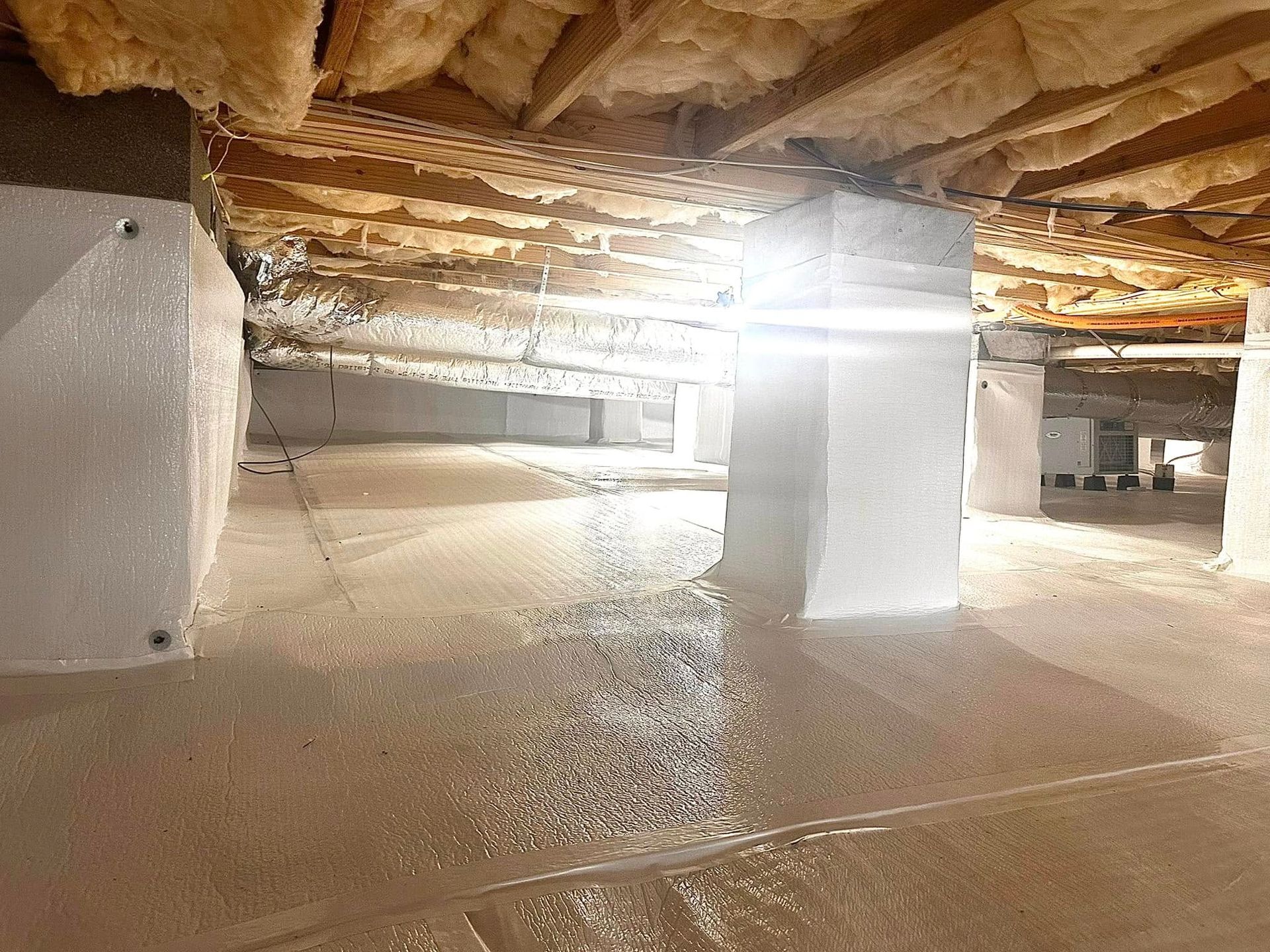
I walked into a crawl space recently that had already been encapsulated by another company. Big space — around 2,500 square feet. The liner was down. The dehumidifier was running. On paper, the job was done.
But here's what I actually found.

The Dehumidifier Was in the Wrong Place
The unit was sitting eight feet from the entrance. Right next to the door. Right next to the wall.
That's the laziest place you can put it — and it's the most common place I see it.
When a dehumidifier is pushed against a wall near the entrance, it can't pull air from across the space. It just cycles the same air near the door over and over. Everything past that point — the middle, the back corners, the far walls — gets nothing.
In this crawl space, that meant 75% of the space had zero air circulation.
The liner was down. The job was "done." And three quarters of that crawl space was still sitting in its own moisture.



It Gets Worse
The unit wasn't even level.
A dehumidifier that isn't sitting level doesn't drain properly. Instead of water moving through the condensate line the way it's supposed to, it drips out the side of the casing.
So not only was this unit in the wrong spot — it was actively dripping water in a space that was supposed to be protected from moisture.
That's not a minor installation hiccup. That's a failed job.
Why Does This Keep Happening?
Why Does This Keep Happening?
What 75% Unprotected Actually Means
Moisture doesn't stay put. It moves through wood, through air, through everything it can find.
When 75% of your crawl space has no air circulation, that moisture has nowhere to go. Over time it builds up in the wood. Once wood moisture content hits 16% and relative humidity hits 65%, you've got the exact conditions fungus needs to grow.
Fungus releases spores. Those spores move up through your floors. And 50% of the air you breathe inside your home comes from your crawl space.
A misplaced dehumidifier isn't just an installation error. It's a slow problem that gets expensive — rot, mold, structural damage, pest activity — and it's completely invisible until it isn't.
What Correct Looks Like
A dehumidifier should be positioned to circulate air across the full footprint of the space — not just the first quarter of it. It should be level. It should drain properly. And someone should physically verify all of that before the job is called done.
Every job I complete gets a post-inspection. I go back under the house myself with a 4K camera. I document every corner. I don't collect payment until the homeowner has seen the before and after photos and I'm satisfied the job was done right.
That's not a bonus. That's the baseline.

Check Yours
If your crawl space has been encapsulated and you've never had anyone verify the dehumidifier placement — it's worth finding out.
Here's what to ask:
Where exactly is the dehumidifier sitting?
Is it level?
Does it have ductwork, and does that ductwork actually reach the far end of the space?
When was the last time someone physically went under there to check it?
If you're in the Nashville area and you want a straight answer, call or text me directly. I'll tell you exactly what's going on under your house — no pressure, no pitch.