
The Simple Science Behind Crawl Space Dehumidifiers
Introduction
Crawl Space Dehumidifiers
WHAT THEY ACTUALLY DO AND WHY IT MATTERS
People think the dehumidifier under their house is just a fancy fan. It's not.
I get it. It sits there, it hums along, and most homeowners never think twice about what it's actually doing. But that little unit is doing some real work every single day to protect your home.
Understanding how it actually functions matters. Not because you need to become an expert, but because knowing the basics helps you make better decisions about your crawl space. It also helps you spot when something's being done wrong, or when a company is cutting corners that are going to cost you later.
So let's break down the simple science behind what's happening under your floor.

The Simple Science
Here's the basic idea. Warm, wet air can hold a lot of water. That's just how air works. The warmer it is, the more moisture it can carry.
Now, that warm air gets into your crawl space and it cools down. And when air cools, it can't hold onto as much water anymore. That extra moisture has to go somewhere. It sticks to the wood. It sticks to your ductwork. It sticks to pretty much everything down there.
That's where your dehumidifier comes in. Its job is to pull that water out of the air on purpose, before it has the chance to settle on your floor joists or your insulation. It's keeping the space drier than it would naturally be left if you just let that humid air sit there.
It's not complicated. But it is important. And understanding this part is the first step to understanding why the rest of the system has to work together.



What a Dehumidifier Can't Fix
Here's something people don't always realize. A dehumidifier is not a cure-all. It can't fix everything going on in your crawl space.
If you've got a leaking gutter dumping water right next to your foundation, that water is going to find its way in. The dehumidifier can't stop that.
If you've got a wet dirt floor with no liner, moisture is going to keep coming up from the ground. The unit can't keep up with that either.
And if you've got open vents letting humid outside air pour in, you're basically asking your dehumidifier to fight a battle it can't win. It's working overtime trying to dry out air that keeps getting replaced with more wet air.
A dehumidifier handles the air. It doesn't handle water intrusion, ground moisture, or ventilation problems. Those need to be addressed separately.
Why Sealing Comes First
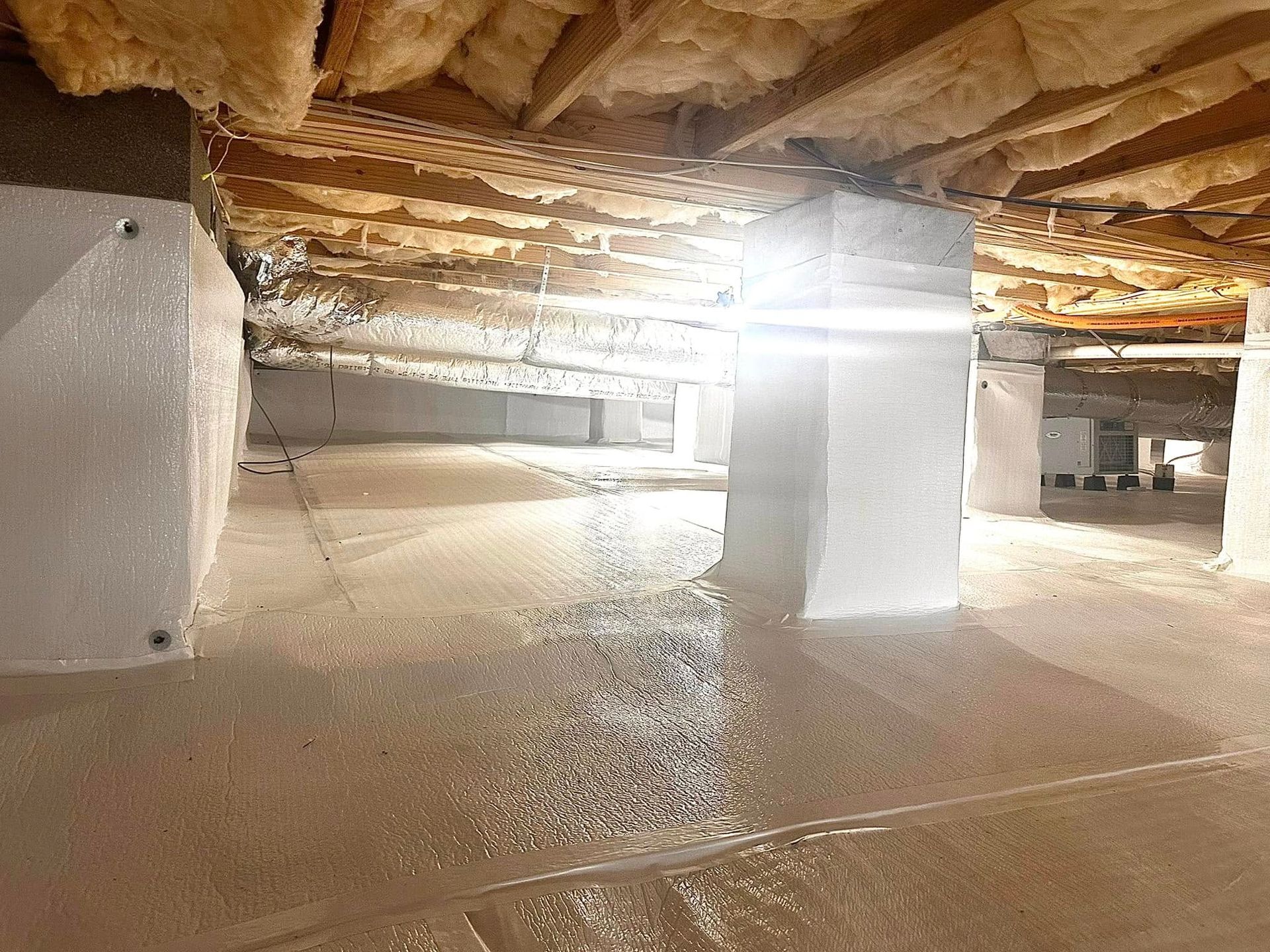
This is where a lot of jobs go wrong. Some companies will drop a dehumidifier into a crawl space and call it done. But if the space isn't sealed first, that unit is set up to fail.
Think about it. If vents are still open, if there's no proper liner, if moisture is coming in from multiple directions, the dehumidifier is stuck trying to dry out a space that keeps getting wet again. It's like trying to empty a bathtub with the faucet still running.
Sealing the crawl space first gets rid of those outside sources of moisture. Once that's handled, the dehumidifier can actually do its job the way it's supposed to. It's not fighting an uphill battle anymore. It's just maintaining a space that's already been set up correctly.
That's the order it has to happen in. Seal it first. Then let the dehumidifier keep up.
Our Humidity Target
On our jobs, we're aiming for under 65% relative humidity. That number isn't random. It's the level where your wood, your insulation, and your ductwork stay protected over time.
Now, I want to be straight with you. This isn't a promise that humidity never moves. Conditions change. Weather changes. What we're giving you is a target we actively watch, not a guarantee carved in stone.
That's why we check humidity levels every time we're out for a service visit. We're not just assuming the unit is doing its job. We're actually looking at the numbers and making sure everything is working the way it should.
Why Annual Maintenance Matters
A dehumidifier isn't something you install and forget about. Once a year, that unit needs a real check.
We look at the filter. We check the drain line. We make sure it's actually running the way it's supposed to. Here's the thing about these units - when they start to fail, they don't usually announce it. No alarm goes off. No warning light flashes. The unit can quietly quit working, and you won't know until the crawl space gets wet again.
By then, you're not just dealing with a broken dehumidifier. You're dealing with moisture buildup, potential damage to your wood and insulation, and a problem that's a lot bigger than it needed to be.
A simple yearly check catches these issues early. It's a small thing that prevents a much bigger headache down the road.
What Homeowners Should Know
If you've got a dehumidifier in your crawl space, it's worth asking a few questions.
When was the last time it was actually checked? Not just glanced at, but checked - filter, drain, run status. Is your crawl space properly sealed, or is that unit fighting a losing battle against open vents and ground moisture? And is anyone tracking your actual humidity levels, or is everyone just assuming the system is working?
You don't need to become an expert on crawl space science. But you should know that a dehumidifier is only as good as the system around it. Sealing matters. Maintenance matters. And somebody needs to actually be checking the numbers instead of guessing.
If nobody's been able to answer these questions for you, that's worth paying attention to.

Request an Inspection
If you're not sure what's going on under your house, the best thing to do is get it looked at.
We don't guess. We look at your actual crawl space, check the humidity, check the equipment, and tell you exactly what we find. No scare tactics, no upselling you on things you don't need.
Request an inspection and I'll come take a look myself. You'll know exactly what's going on under your house and what, if anything, needs to be done about it.
That's how we handle it at Crawl Logic.