Why Your Floors Feel Bouncy (And It's Not Just an Old House)
Introduction
Bouncy Floors Explained
WHAT'S REALLY HAPPENING UNDER YOUR HOUSE
If you've got a spot in your house where the floor feels soft or bouncy when you walk across it, you've probably been told it's just an old house thing. That's the go-to explanation most people hear, and it's easy to believe. Old houses settle. Things aren't perfectly level anymore. So a little bounce seems normal, right?
Not really.
Most of the time, that bounce is a clue. It's telling you something is going on underneath your house, not in the living room where you're standing. And it's not something that just happens because a house got old. There's usually a real reason behind it, and once you know what to look for, it's not hard to understand.
I want to walk you through what's actually causing that soft or bouncy feeling, what I look for when I inspect a home, and what it takes to fix it the right way.

What a Bouncy Floor Actually Feels Like
You know the feeling. You walk across a certain part of the room and the floor gives a little under your foot. Maybe it's subtle. Maybe it's obvious enough that you avoid stepping there.
Sometimes it's isolated to one spot. Other times it's a whole section of the room that feels soft or uneven. People usually notice it near the kitchen, in hallways, or in older additions to the house.
At first, most homeowners brush it off. It's easy to assume it's just part of living in an older home, especially if nothing else seems wrong. But a bouncy floor isn't something that should just be accepted. It's your house telling you something changed underneath, and it's worth paying attention to before it gets worse.



Where the Real Problem Starts
Here's the thing. The floor itself usually isn't the problem. What's happening underneath it is.
Every floor in your house is held up by a system of wood framing underneath. That's what carries the weight when you walk across the room. When that wood and the supports holding it up are doing their job, you don't feel a thing. The floor stays solid.
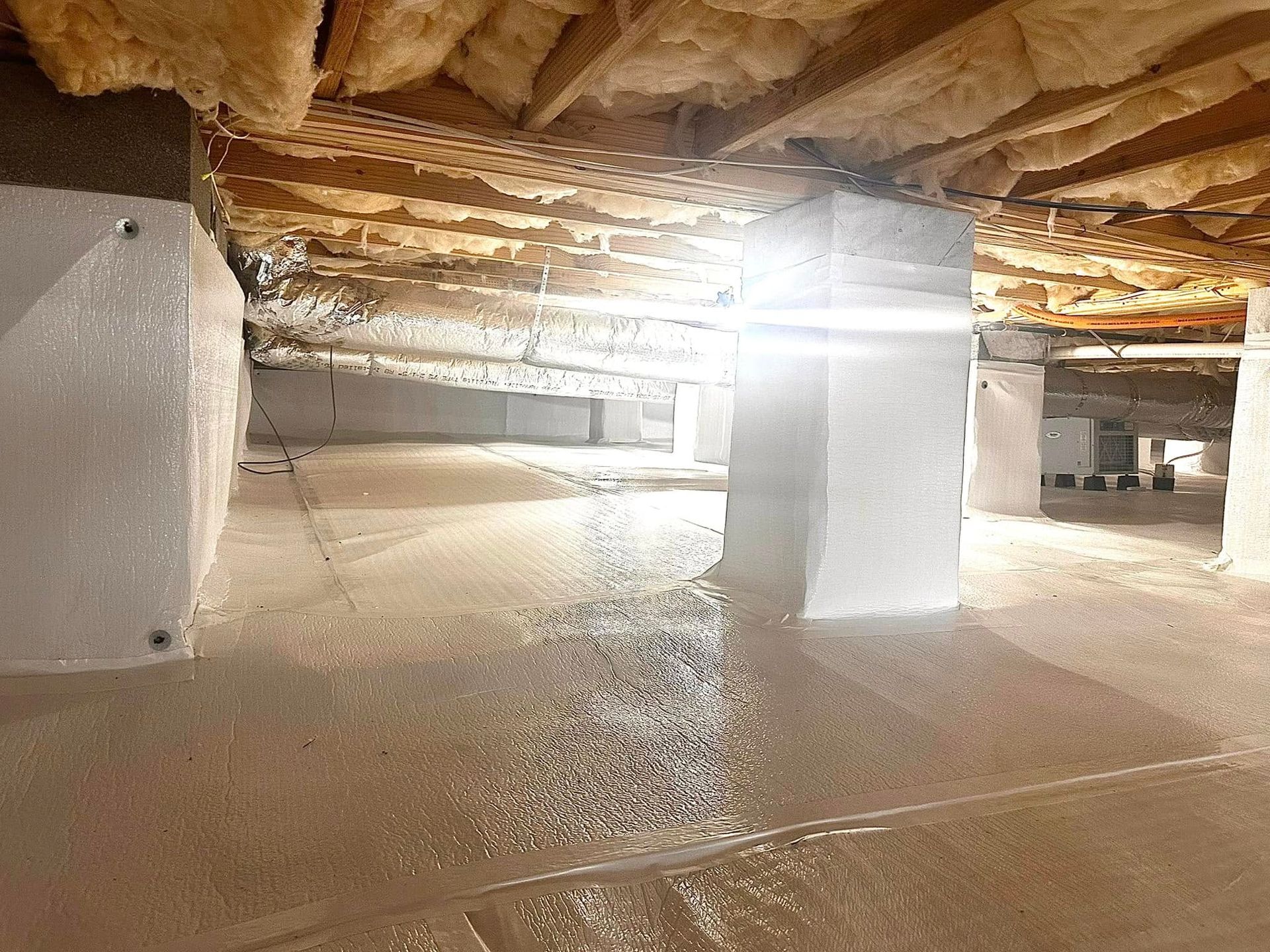
So when a floor starts to feel soft or bouncy, the answer isn't in the living room. It's underneath the house, in the crawl space, where you can't see it. That's why I don't stand in the kitchen and guess what's going on based on how the floor feels. I go under the house and look at what's actually happening with the wood and the supports.
How Moisture Causes the Damage
Most of the time, the root cause comes down to one thing: moisture.
When a crawl space stays wet for a long period of time, it starts to affect the wood framing that holds your floor up. Wood that sits in damp conditions for months or years doesn't stay strong. It softens. It weakens. And once that happens, it can't carry weight the way it's supposed to.
It's not just the wood either. The supports and piers that hold everything up can start to shift or fail when the ground underneath them stays wet. A pier that used to sit solid can loosen. A support that used to carry its share of the weight can stop doing its job.
This damage doesn't happen overnight. It builds up slowly, over months or years, which is part of why it catches people off guard. You don't notice anything until one day the floor just doesn't feel right anymore.
What We Look For During an Inspection
When I get a call about a bouncy or soft floor, I don't guess. I go underneath the house and take a look for myself.
Here's what I'm checking for:
Wet ground. Standing water or damp soil tells me moisture has been a problem for a while.
Soft wood. I check the floor joists and framing to see if the wood has started to weaken or rot.
Loose or missing supports. Piers and support posts should be solid and doing their job. If they've shifted, sunk, or gone missing altogether, that's a direct cause of the bounce you're feeling upstairs.
Every one of these things tells a piece of the story. And once I know what's actually causing the problem, I can tell you exactly what needs to happen to fix it.
How We Fix It
Fixing a bouncy floor means addressing what's actually causing it, not just patching the symptom.
First, we deal with the moisture. If your crawl space is staying wet, that has to be corrected before anything else matters. Whether that means encapsulation, better drainage, or a dehumidifier, the goal is the same. Get the crawl space dry and keep it that way.
From there, we look at the wood and the supports. If joists have softened or rotted, they need to be repaired or replaced. If piers have shifted or failed, we rebuild that support so it's carrying weight the way it should again.
Once the crawl space is dry and the structure underneath is solid, that bounce you've been feeling goes away. Not because we covered it up, but because we fixed what was actually wrong.
Why This Matters for Nashville Homeowners
Middle Tennessee gets a good amount of rain throughout the year, and that moisture has to go somewhere. A lot of it ends up under your house if your crawl space isn't properly sealed and drained.
Nashville has plenty of older homes, and a lot of them were built without any kind of real moisture protection in the crawl space. Over the years, that adds up. Wood sits in damp conditions longer than it should, and eventually you start feeling it in your floors.
The good news is this is usually fixable. Catching it early means less damage and less cost. The longer a wet crawl space goes unaddressed, the more it affects the wood and supports holding your house up, and the bigger the repair becomes.

Ready to Get Your Floors Checked?
If you're feeling a soft or bouncy spot in your floor, don't just write it off as an old house thing. There's usually a real reason behind it, and it's worth finding out what's going on before it gets worse.
We offer inspections where we actually go under your house and look. No guessing from the carpet, no assuming it's normal. I'll tell you exactly what I find and what it would take to fix it.