The 10-Second Crawl Door Check Every Homeowner Should Do
Introduction
The Crawl Door Check
A SMALL DETAIL THAT PROTECTS YOUR WHOLE CRAWL SPACE
Got ten seconds? Go check your crawl door right now. Open it, close it. Does it shut all the way? Does it stay shut?
I know what you're thinking. It's just a door. Why does it matter?
Here's the thing. That little door is doing more work than people realize. When the seal wears out or the latch stops catching, you're basically leaving a gap between your crawl space and everything outside. Rain, humid air, even critters can find their way in without much effort at all.
It's a quick check. It takes less time than reading this paragraph. But ignoring it can lead to problems that cost a lot more than ten seconds to fix.

What a Crawl Door Actually Does
Most people think of the crawl door as just an access point. Something for us to crawl through when we're doing an inspection or a repair. And sure, that's part of it.
But the real job of that door is keeping your crawl space separated from the outside world.
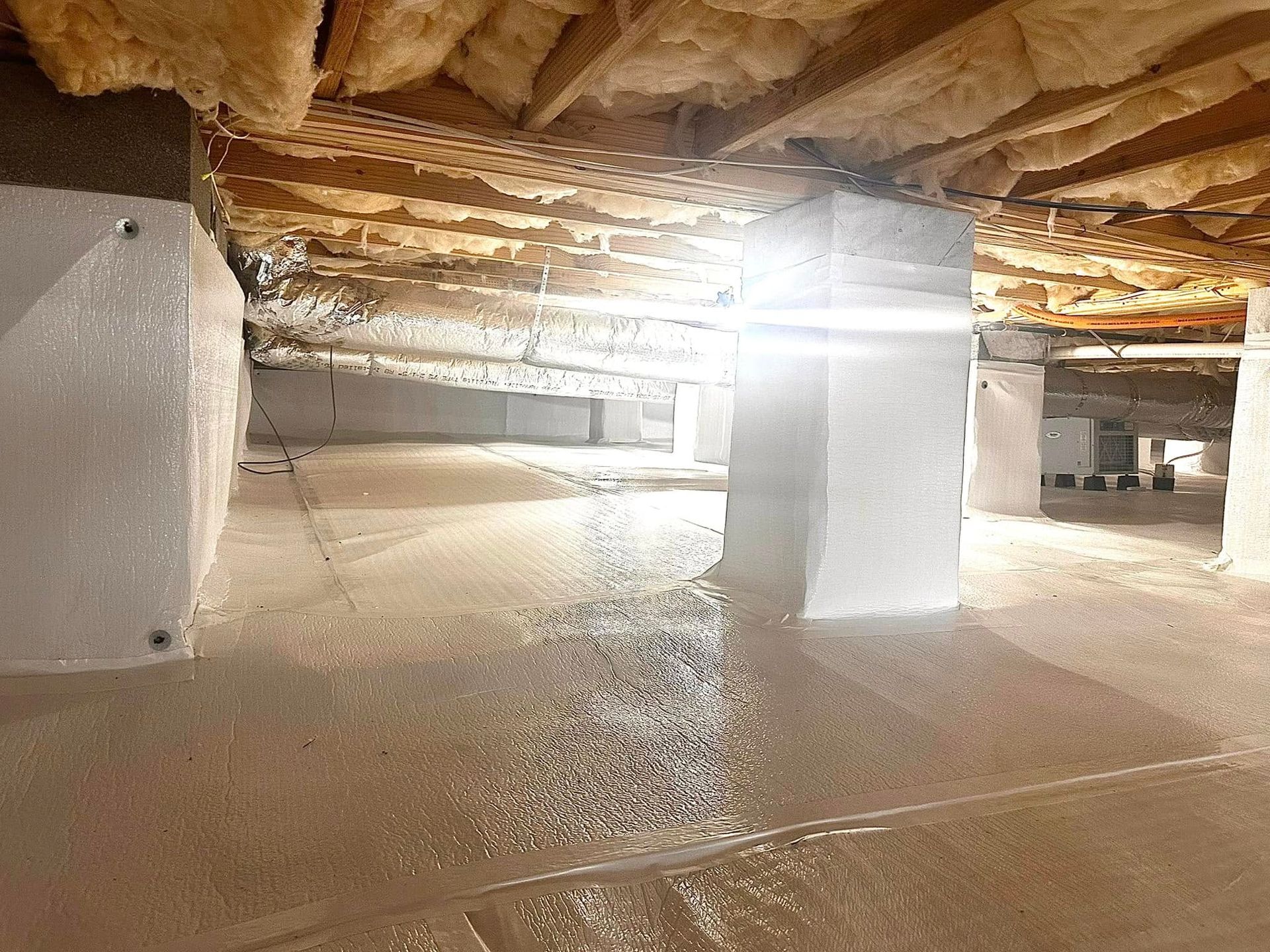
Your crawl space is supposed to be a controlled environment. If you've had encapsulation done, or even if you haven't, that space needs to stay protected from outside air, moisture, and pests. The crawl door is one of the main barriers making that happen.
When it's sealed right and latching properly, it's doing its job quietly in the background. You never have to think about it. But when it fails, everything you're trying to protect inside that crawl space is suddenly exposed.
It's not a fancy part of the house. It's not something anyone gets excited about. But it matters more than people give it credit for.



The 10-Second Check
Here's exactly what to do. Walk over to your crawl door and open it. Then close it.
Did it shut all the way? Did it stay shut, or did it pop back open?
If it hangs open even a little, that's your first sign something's wrong. Next, take a look at the seal around the edges. Is it cracked, chewed up, or missing in spots? You're looking for daylight gaps, any place where you can see light coming through around the frame.
Check the latch too. Make sure it actually catches and holds the door closed, not just resting shut.
Last thing, look at the bottom of the door frame. Is there any standing water at the sill? That's a sign water is pooling somewhere it shouldn't be.
That's it. Ten seconds, maybe fifteen if you're thorough. But what you find in those ten seconds tells you a lot about what's happening under your house.
What Happens When the Seal Fails
When that seal goes bad, or the door won't latch shut, you've basically opened up an invitation to everything outside.
Rain splashes in during storms. That water sits under your house, adding moisture to a space that's supposed to stay dry. Outside air gets pulled in too, and that air usually comes with humidity. In Nashville, with how humid it gets, that's not a small thing. That moist air under your house can lead to mold, wood rot, and a whole list of problems you don't want to deal with.
And then there's the critters. Mice, insects, snakes - they're all looking for an easy way into a warm, dark space. A gap around a crawl door is exactly what they're looking for.
None of this happens overnight. It builds up slowly. That's what makes it tricky. You might not notice anything's wrong for months, even years, until you've got a real problem on your hands.
Why This Detail Gets Overlooked
I get it. Nobody's walking around thinking about their crawl door. It's not exciting. It's not something you show off to your neighbors.
Most homeowners don't even know where their crawl door is half the time, let alone think to check it.
And that's exactly why it becomes a problem. The stuff that gets ignored is usually the stuff that causes the most trouble down the road. A crawl door failing isn't dramatic. It doesn't flood your house overnight. It's a slow leak of moisture, air, and opportunity for pests, happening quietly while nobody's paying attention.
In my experience, the small details are where most crawl space problems start. Not the big stuff. The stuff people walk right past every day without a second thought.
How This Fits Into the Bigger Picture
This is why we check crawl doors on every single inspection. Not because someone told us to. Because it matters.
Encapsulation, dehumidifiers, vapor barriers - all of that work means a lot less if the crawl door isn't doing its part. You can have the best system in the world down there, but if outside air and moisture are sneaking in through a bad seal, you're fighting a losing battle.
Doing the job right means looking at the whole picture. It's not just about the big, obvious stuff. It's about catching the small things that can undo all that work over time. That's the difference between a crawl space that stays protected for years and one that runs into problems again down the road.
What to Do If You Spot a Problem
If you checked your door and something seemed off, don't panic. Sometimes it's a simple fix. A new seal, an adjusted latch, maybe a small repair to the frame.
But sometimes it's a sign of something bigger going on underneath your house. Water pooling at the sill could mean drainage issues nearby. A door that's warped or won't sit right could point to shifting or moisture damage over time.
Either way, it's worth having someone take a look. Catching it early usually means a quick, inexpensive fix. Waiting on it usually means a bigger repair bill later.
When you call us, we'll come out, take a look at the door and the rest of your crawl space, and give you an honest answer about what's going on. No guessing games, no upselling you on things you don't need.

Ready to Check Your Crawl Space?
If your crawl door isn't sealing right, or if you're not sure what's going on under your house, reach out. We'd be glad to take a look.
We offer free inspections for homeowners in Nashville and the surrounding areas. I do every inspection myself, and I'll walk you through exactly what we find, in plain language, with photos so you can see it for yourself.
No pressure, no sales pitch. Just an honest look at your crawl space and a straightforward conversation about what, if anything, needs to be done.
That's how we've always done things at Crawl Logic, and that's not going to change.