Common Drainage System Mistakes We See in Nashville Crawl Spaces
Introduction
Crawl Space Drainage Done Wrong
WHAT HAPPENS WHEN SHORTCUTS GET SOLD AS SOLUTIONS
We're in Nashville today looking at a crawl space that's got some real problems.
Wood decay. Fungus. Heavy rodent activity.
The kind of stuff that tells you moisture has been out of control for a while.
But here's the thing - someone already came out and installed a drainage system.
The homeowner paid for a fix. They thought the problem was handled.
It wasn't.
What we found was a drainage system that's actually making things worse.
Puddles all over the crawl space. Water sitting where it shouldn't be. And a setup that was never going to work the way it should.
This is the kind of job we see more often than you'd think around Nashville.
And it's worth talking about, because if you're paying for drainage work, you deserve to know what a real install looks like versus what a shortcut looks like.
The Shortcut We Found
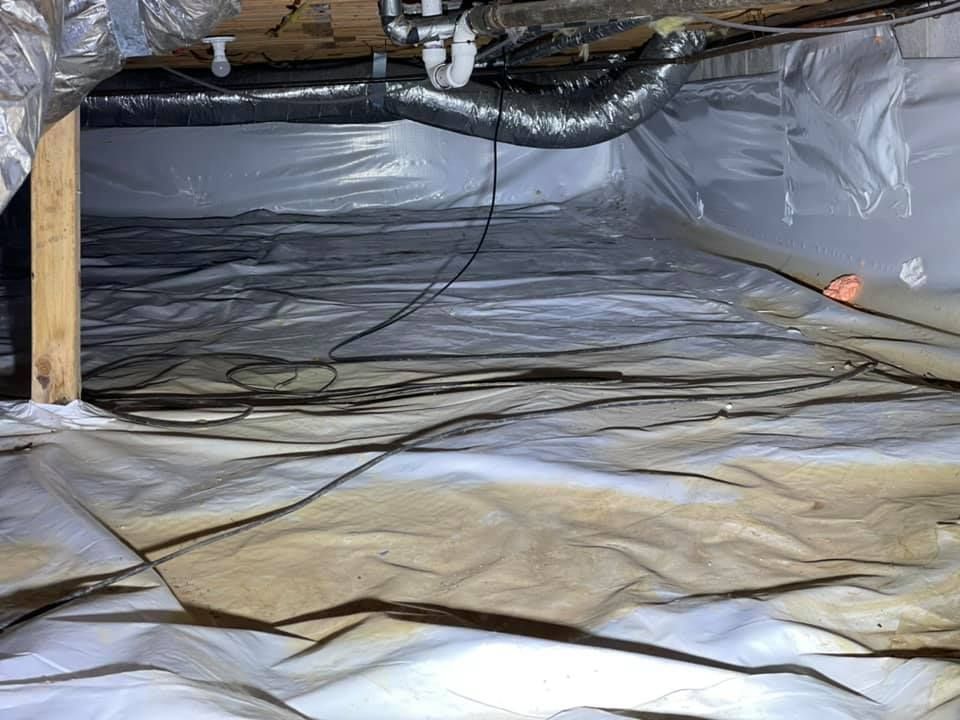
The first thing we noticed was the pipe. It was corrugated pipe from Home Depot, laid right on top of the plastic. No trench. No gravel. Just pipe sitting on the surface, running to a sump pump.
That's not how drainage works.
When you install a drainage system, you dig a trench flush with the ground. You backfill it with gravel so water can flow into the pipe and move toward the pump. The pipe needs to be buried, not sitting on top of the vapor barrier collecting water around it.
What we found here was water pooling around the pipe instead of draining through it. Puddles everywhere. The system wasn't moving water out. It was just giving it a place to sit.
The Sump Pump Problems
The pipe wasn't the only issue. The sump pump setup had problems too.
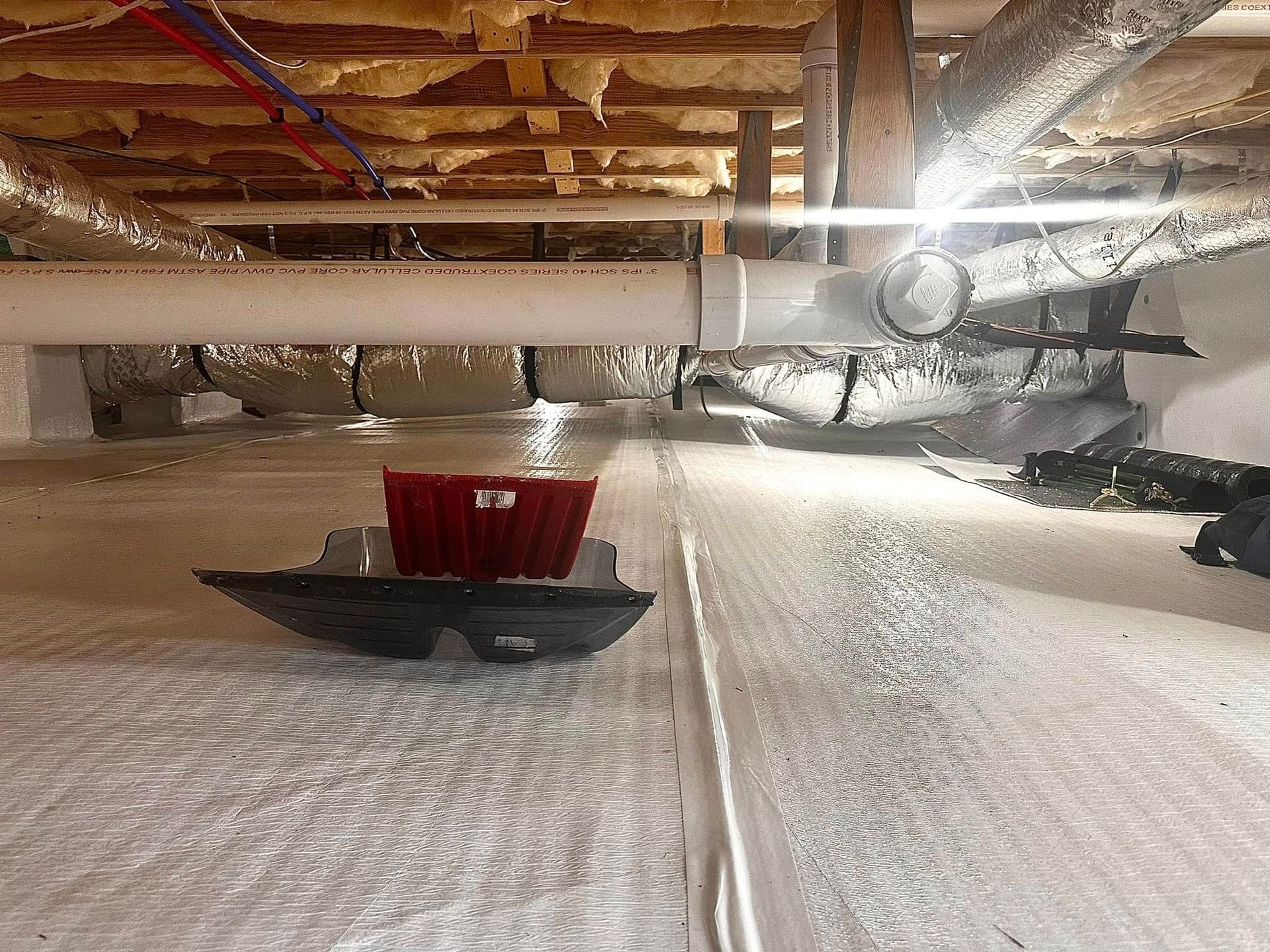
First, the basin was too small. When your basin is undersized, it has to completely fill up and overflow before the float switch kicks on. That means water is already backing up into your crawl space before the pump even starts working.
You want the float switch inside the bucket where it can engage as the water rises. Not after the water has already spilled over.
On top of that, they used the wrong pump. It was a submersible pump without a stationary float switch. These pumps are meant to remove water, but they need a stationary float to work properly in a crawl space. The float goes up, engages the pump, and pushes the water out. Without that, the pump doesn't kick on when it should.
These aren't small details. This is basic stuff that has to be right for the system to actually do its job.
What a Proper Drainage System Looks Like
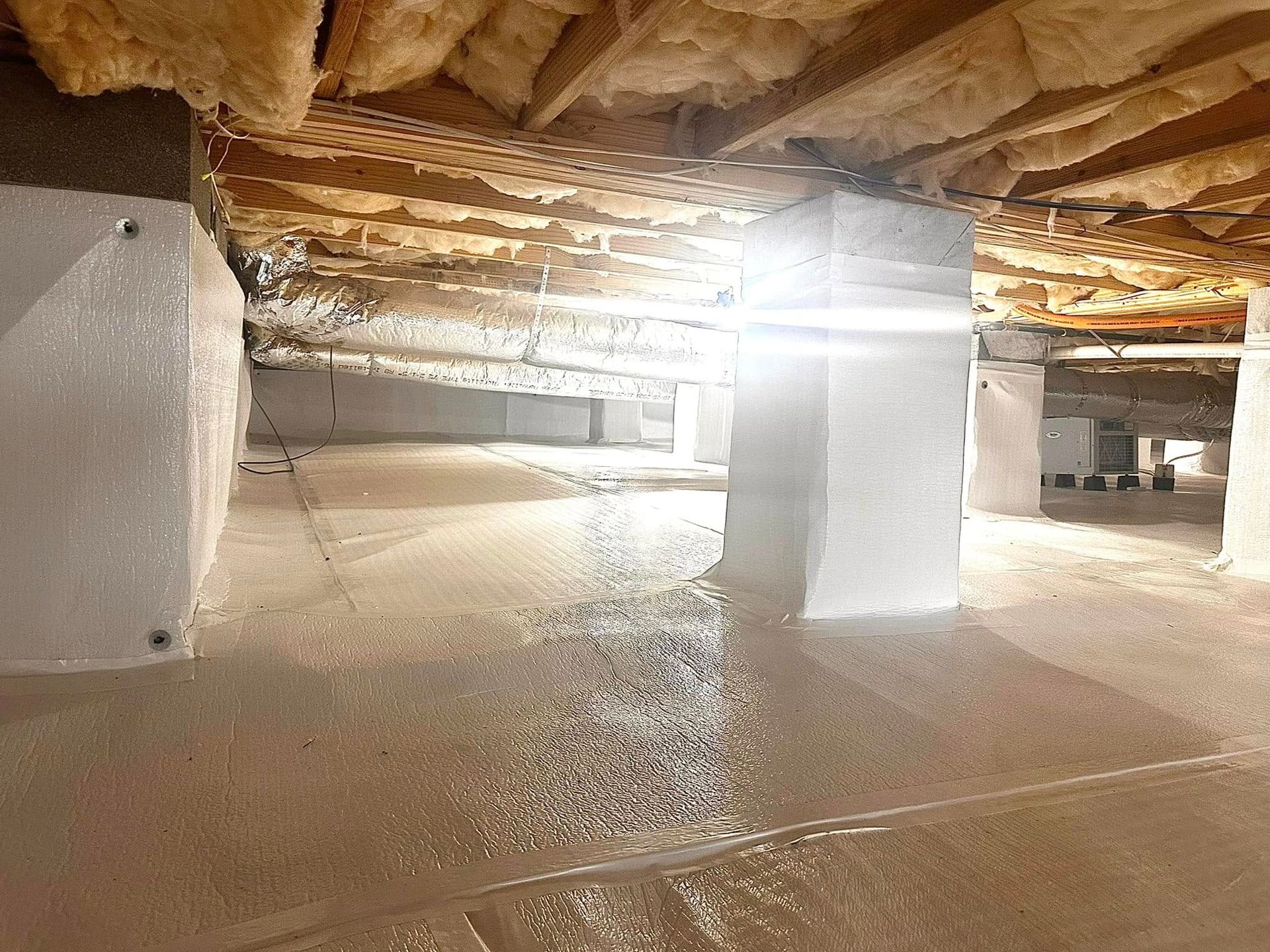
A real drainage system starts with a trench dug flush with the ground. You line it with gravel so water flows down into the pipe instead of sitting on top of the plastic.
The pipe should be an easy flow system, not corrugated pipe from the hardware store. Corrugated pipe has ridges that catch debris and slow water down. A smooth-wall pipe moves water the way it's supposed to.
The trench gets backfilled with gravel, and everything sits level so water moves toward the sump pump naturally. The basin is sized correctly, the pump has a stationary float switch, and when water enters the system, it actually goes somewhere.
That's the difference between a drainage system that works and one that just looks like something was done.
Why This Keeps Happening
This is the type of work we see getting sold to homeowners around Nashville all the time.
And it's not because homeowners aren't paying attention. It's because most people have never seen the inside of a crawl space before. They don't know what a proper drainage install looks like. They call a company, get a quote, and trust that the work is being done right.
Nobody shows them the difference between a real system and a shortcut. Nobody explains why the details matter. So when someone lays pipe on top of plastic and calls it a drainage system, the homeowner has no way of knowing that's not how it's supposed to be done.
That's not their fault. But it's exactly why we talk about this stuff. The more you understand about what goes into a proper install, the harder it is for someone to sell you something that doesn't actually work.
What Homeowners Should Look For
If you're getting quotes for crawl space drainage, here are a few things worth asking about.
Ask how the pipe is installed. Is it going in a trench or sitting on top of the vapor barrier? Ask what kind of pipe they use. Ask about the sump pump basin size and what kind of float switch the pump has.
A good company won't mind explaining this stuff. They'll walk you through what they're doing and why.
If the drainage work is already done, take a look next time you're near your crawl space access. Is there standing water? Are there puddles around the pipe? Does the system actually seem to be moving water, or is it just sitting there?
Red flags include pipe laid on top of plastic, undersized basins, and pumps that don't kick on until water is already overflowing. If you're seeing any of that, it might be worth getting a second opinion.

Ready to Get Your Crawl Space Right?
If you've got questions about your drainage system or anything else going on in your crawl space, reach out. I'm happy to talk through it with you.
We offer free inspections for homeowners in the Nashville area and surrounding counties. I do all the inspections myself. No salespeople, no pressure, no runaround.
Just an honest look at what's happening under your house and a straightforward conversation about your options.
You can call or text me directly. I'll answer your questions, show you what we're seeing, and let you decide what makes sense for your home.
That's how we do things at Crawl Logic.