Why Your Crawl Space Might Still Be a Waterbed After "Professional" Repairs
Introduction
Crawl Space Drainage Done Wrong
WHAT WE FOUND UNDER A LEBANON, TENNESSEE HOME
I was under a house in Lebanon, Tennessee recently, and what I found is exactly why I make these videos.
A big nationwide company had already been through here. They installed a dehumidifier, but there was no real encapsulation and no proper drainage. When I talk about drainage in my videos and in my book, I always break it down into three types: Hydraway, EZflow, and corrugated pipe with gravel. Each one has its own requirements to actually work.
What I found under this house wasn't any of those done correctly. It was a shortcut. And the homeowner is still dealing with water problems because of it.
This matters because a lot of homeowners in Middle Tennessee are paying good money for crawl space work, trusting that it's being done right. When it's not, you end up with the same problems you started with, except now you've already spent the money to fix it.
What Proper Drainage Should Look Like
Drainage systems aren't complicated, but they do require attention to detail.
If you're using Hydraway, that system has a lower tolerance for error. The gravel needs to be flush and tight around it because water has to travel through that gravel to reach the pipe. If it's loose or incomplete, the system doesn't work the way it's supposed to.
EZflow and corrugated pipe with gravel have their own requirements too, but the principle stays the same. Water needs a clear path. If that path isn't built correctly, the water has nowhere to go, and it just sits there.
This isn't advanced stuff. It's basic installation done with care. But it's also the kind of detail that gets skipped when a company is moving fast and trying to get to the next job.
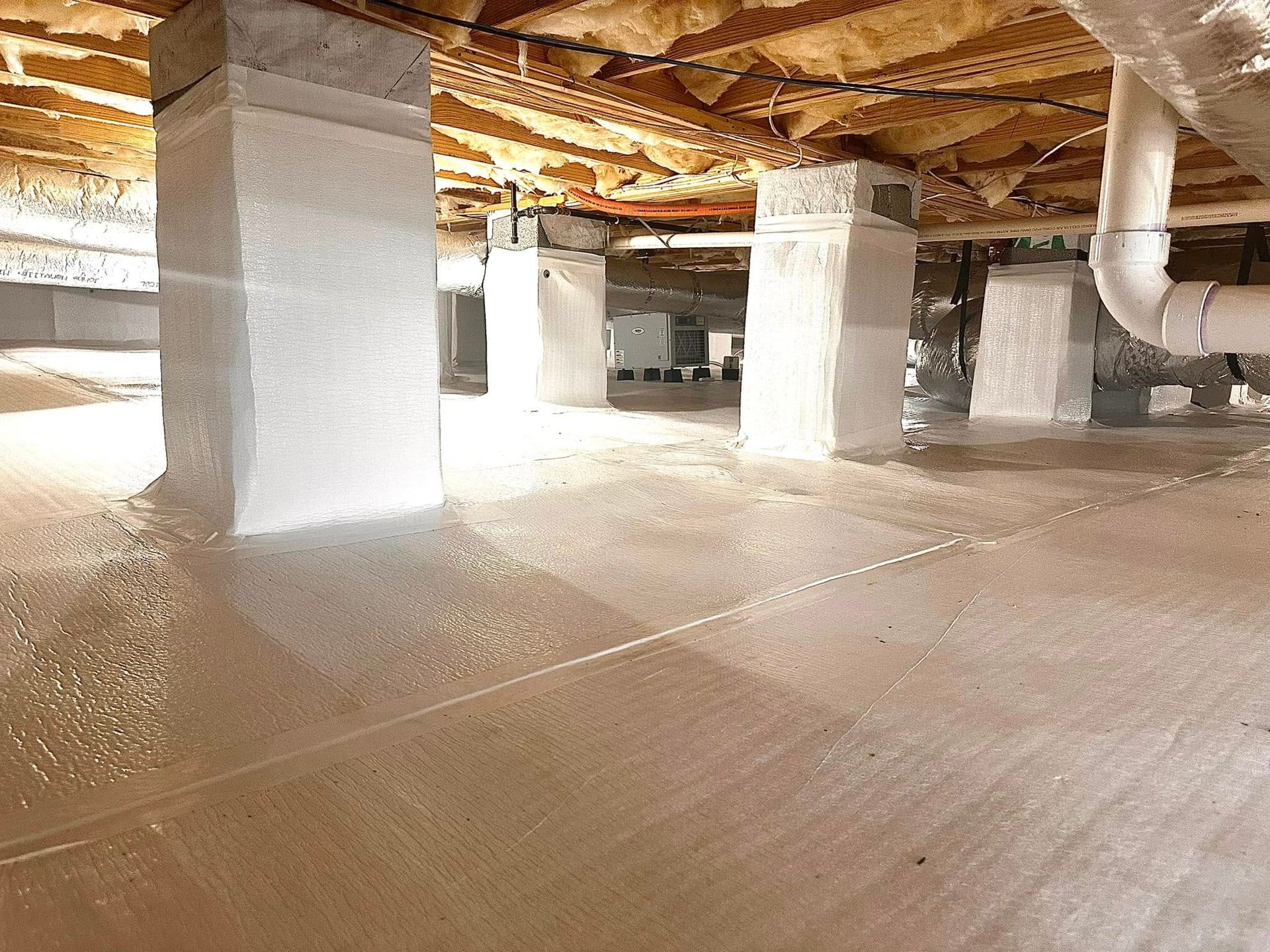
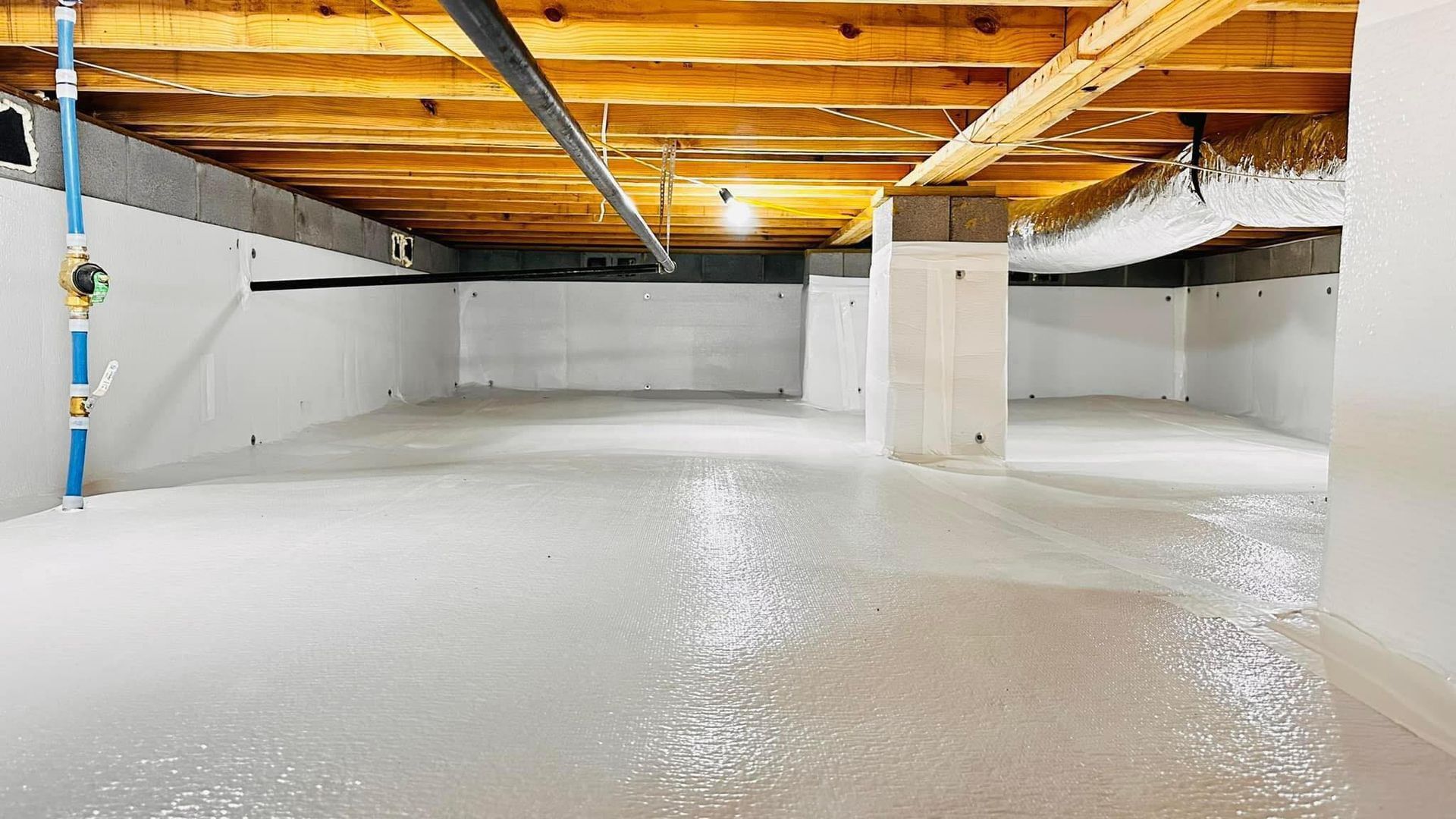
What We Actually Found
When I crawled into this space, here's what I saw.
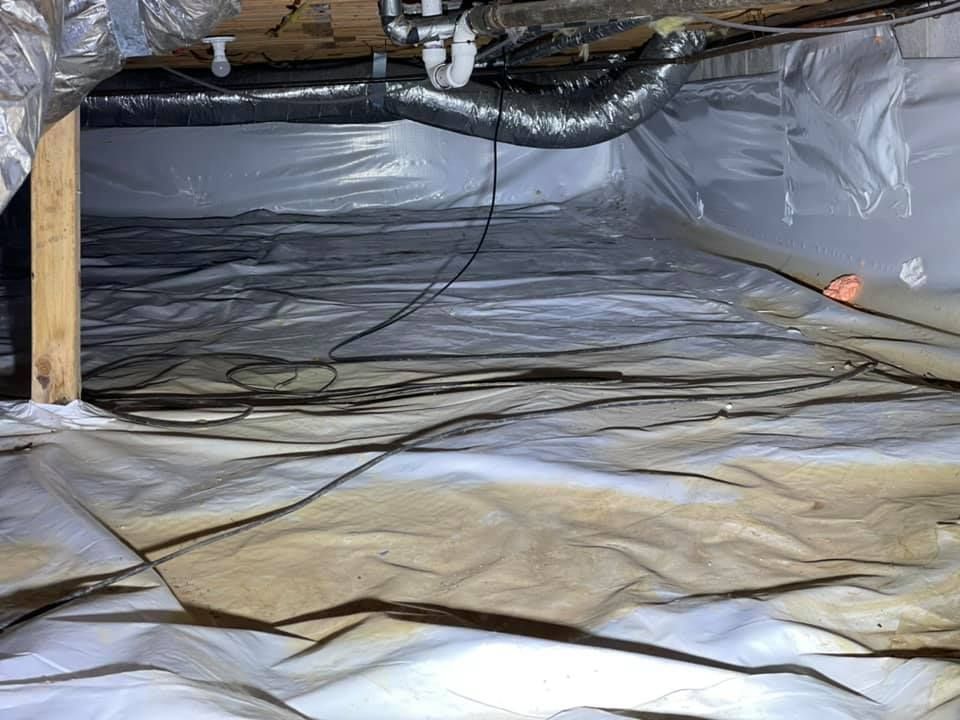
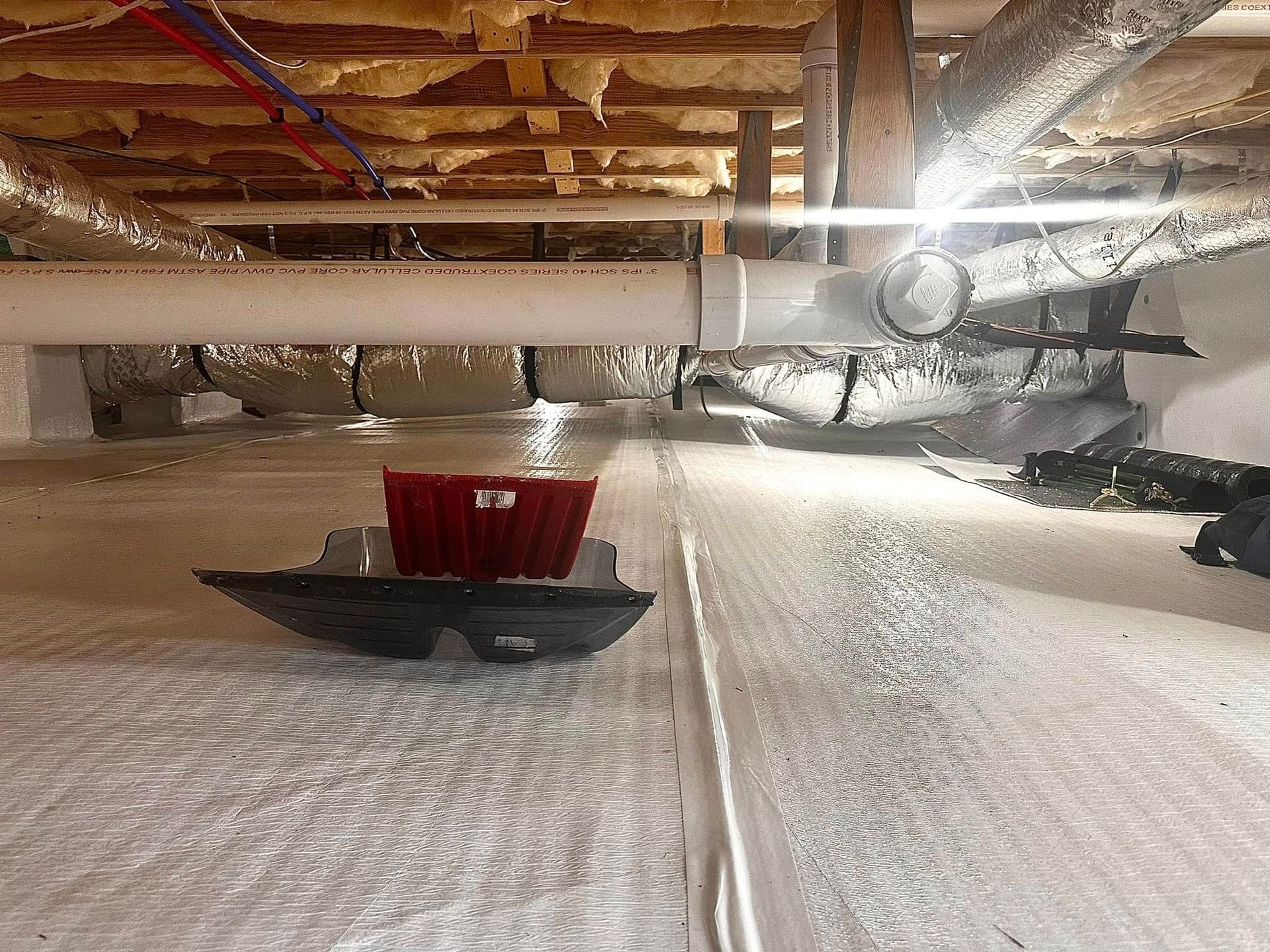
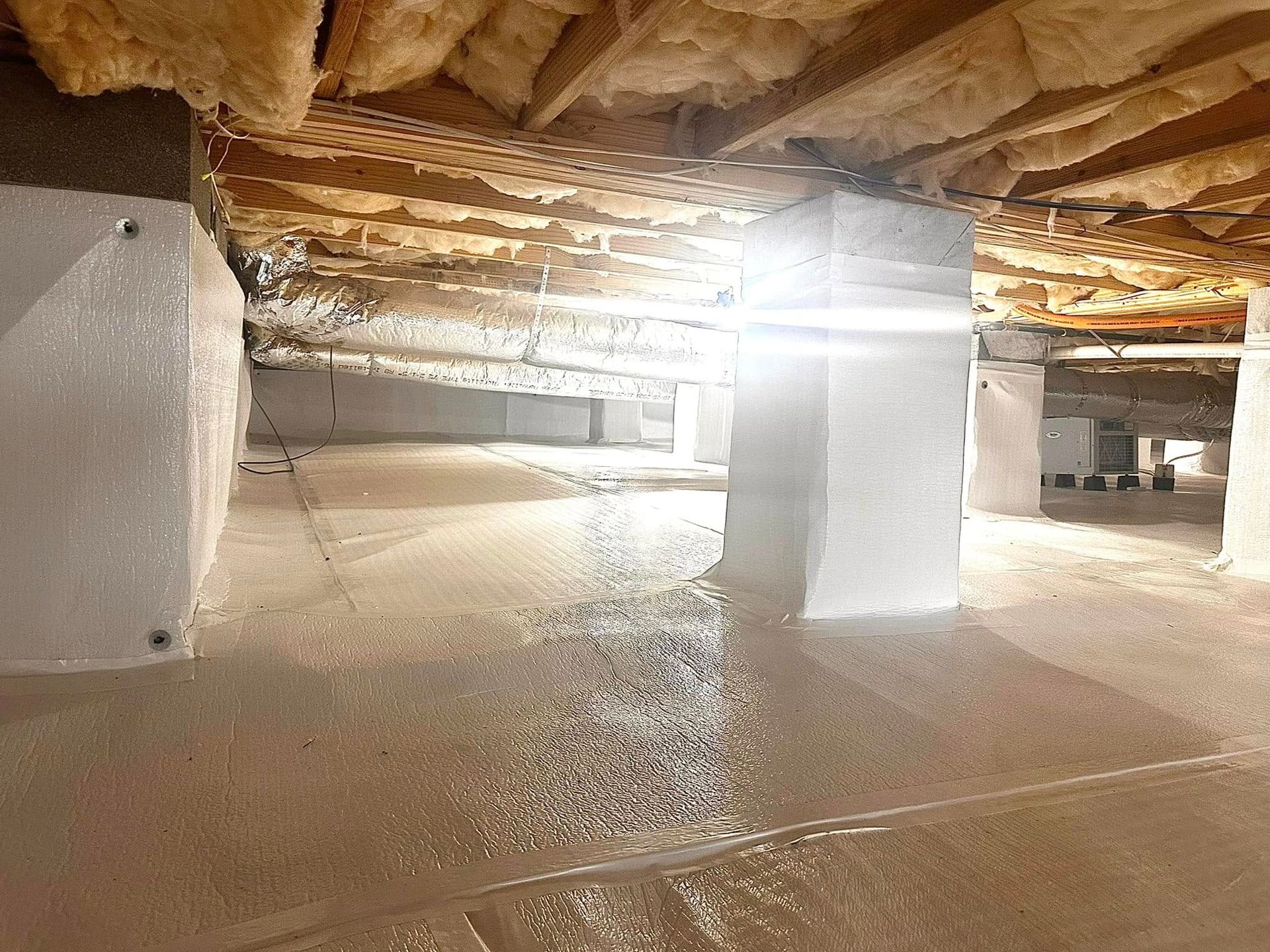
A dehumidifier had been installed. That part looked fine on the surface. But there was no real encapsulation and no proper drainage system in place to support it. The pipe was just sitting in one top corner. Not anchored. No gravel around it.
For a system like this to work, gravel needs to surround the pipe so water can travel through it properly. Here, there wasn't any. It was basically just a pipe dropped into place and left there.
The result is a crawl space that still acts like a waterbed. The homeowner paid for a fix, but the underlying problem never actually got solved. Water still had nowhere proper to go.
Understanding Your Crawl Space's Slope
Every crawl space has a shape, and that shape determines how water moves through it.
This particular space runs high to low, front to back. That's important because it means water naturally travels in one direction as it collects. When you understand the slope of a crawl space, you can figure out where drainage needs to be placed and how many sump pumps are actually needed to handle the water.
A lot of companies skip this step. They install one pump, call it done, and move on. But if the slope of the space isn't factored in, that one pump is often not enough to keep up with how much water is moving through.
How Many Sump Pumps Do You Actually Need
Here's a simple rule of thumb. You want one sump pump for every 150 linear feet of crawl space.
This job in Lebanon only had one sump pump. Given the size and slope of the space, it needed two. That's a big part of why the water problem never actually went away.
When it comes to the pump itself, I like half horsepower pumps. One-third horsepower tends to be underpowered for most jobs. And triple pumps? Those are really only necessary if you're dealing with something extreme, like a crawl space that's basically become a swimming pool.
Getting the right pump, in the right quantity, based on the actual size and slope of the space, is what separates a job that works from one that just looks finished.
The Cost of Cutting Corners
This client more than likely spent thousands of dollars with that nationwide company. And what they got for it was a pipe sitting in a corner with no gravel and no anchoring.
That's the part that gets me. It's not that the work was hard to do right. It's that it just wasn't done. My guys would be fired if they turned in work like this. There's a difference between a job that's finished and a job that actually solves the problem. This homeowner paid for the first one and needed the second one.
When you're paying for crawl space work, you should be paying for a system that actually functions, not just something that looks complete from a quick glance.
How We Fix Jobs Like This
When we come into a situation like this, the first thing we do is figure out what's actually going on. Not what the last company said they did, but what's really down there.
In this case, that means correcting the drainage entirely. Making sure the gravel is placed properly around the pipe, adding a second sump pump to match the slope and size of the space, and making sure everything is anchored the way it should be.
We document the whole process. Photos, video, walking the homeowner through exactly what we found and exactly what we're doing to fix it. You shouldn't have to just trust that the work got done right. You should be able to see it for yourself.

Ready to Get Your Crawl Space Checked?
If you're not sure whether your crawl space drainage is actually working, or if you've had work done before and want a second opinion, reach out. I'm happy to take a look.
We offer free inspections throughout Middle Tennessee. I do these inspections myself, and I'll show you exactly what's going on under your house. No pressure, no gimmicks. Just an honest conversation about what you're dealing with and what it would take to fix it right.
That's how we do things at Crawl Logic.